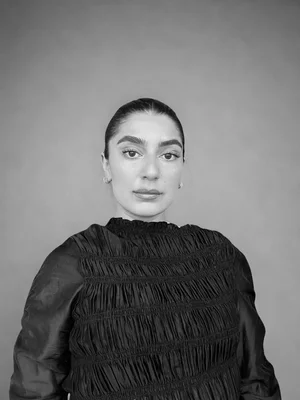
Sharvari Bhide-Limaye on Kathak, Community and Bringing the Form to New Audiences in Melbourne
In conversation with Melbourne-based Kathak artist, educator and the creative force behind The Cultural Mosaic's Melbourne chapter, Sharvari Bhide-Limaye reflects on Kathak as anchor and pathway, building a thriving Kathak community from the ground up, and what it means to carry a classical form into new cultural terrain.
Written by Simi Kaur
All images courtesy of Sharvari Bhide-Limaye
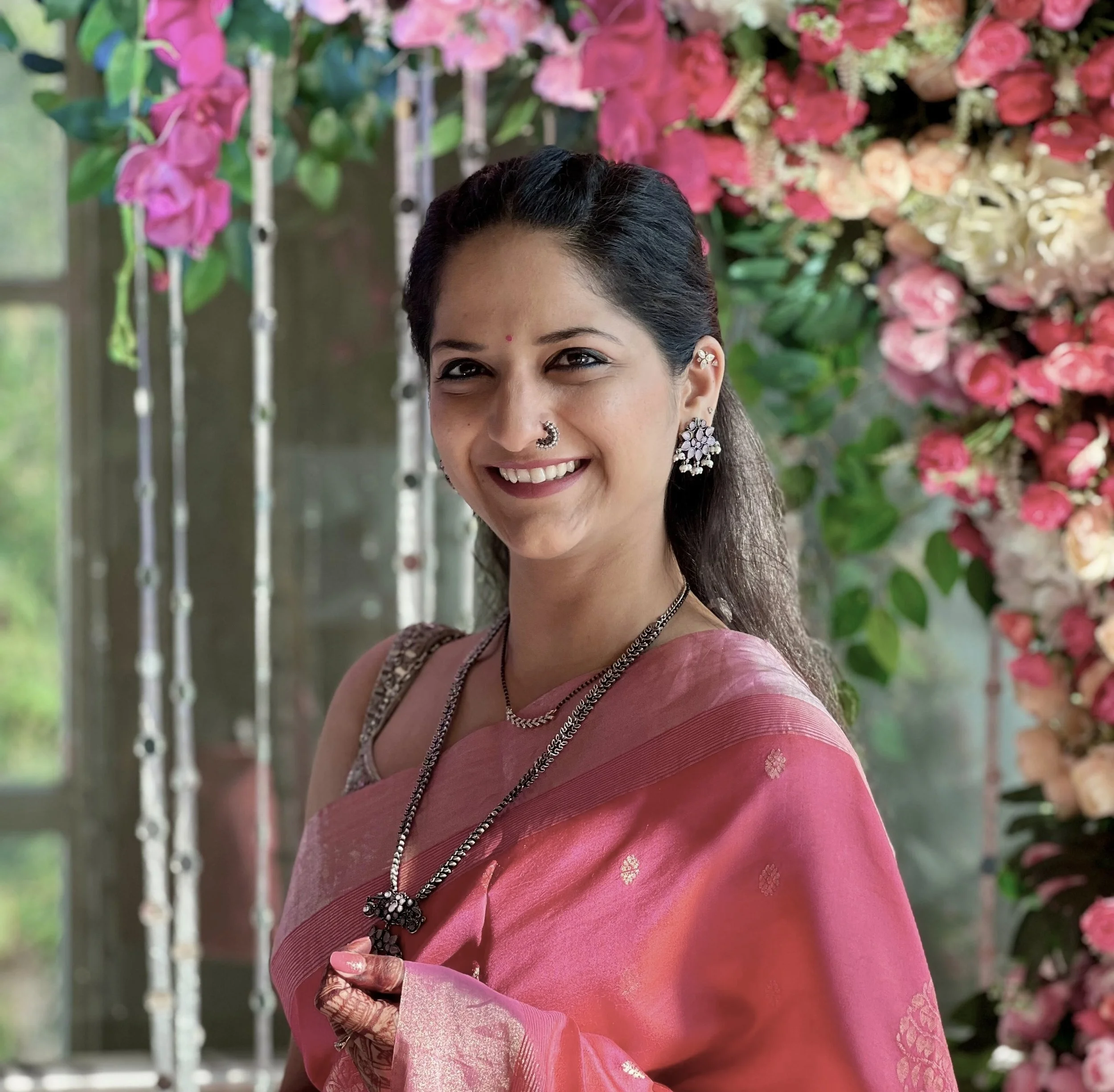
Photography by Aishwarya Ranbhor.
When Sharvari Bhide-Limaye stepped onto the stage at the Victorian Premier's Diwali State Reception hosted in Melbourne, she had been in the city less than a year. Having moved to Australia in 2023 and taken a considered pause before returning to teaching and performing that evening with her growing troupe of Melbourne-based students, marked a significant moment in this new chapter. It was a signal: that Melbourne was receptive, that there was an audience here, and that the work of building something real was taking shape.
Becoming a Kathak Artist
“[Kathak] is a discipline shaped through daily riyaaz, and a language through which I think, feel, and express.”
Sharvari's relationship with dance began the way many do, with a child's instinct for movement, and a stage that rewards it. She danced enthusiastically at school performances, and it was the warmth of audience responses that first nudged her towards formal training. At seven, she enrolled in her first Kathak class.
What followed was years of deep, patient training under her teacher, Tejaswini Sathe, at the Tanz Kathak Academy in Pune. Her training included up to 10 years of formal teacher training alongside a Master of Arts (Kathak) from Pune University's Centre of Performing Arts, and an Advanced Diploma in Kathak from Bharati Vidyapeeth Deemed University. A Bachelor of Arts in French from Ferguson College ran concurrently, a detail that would prove formative to the kind of artist she became.
"At this point in my journey, Kathak represents much more than performance," she reflects. "It is a discipline shaped through daily riyaaz, and a language through which I think, feel, and express." Where her early years were spent absorbing technique and grammar, time has brought her to the form's deeper registers; its capacity to hold emotion, narrative, and abstraction at once.
Today, she describes Kathak as "a space of dialogue — between tradition and individuality, and between structure and spontaneity." It is both anchor and pathway. That tension between being grounded and being in motion has come to define how she dances and how she moves through the world.
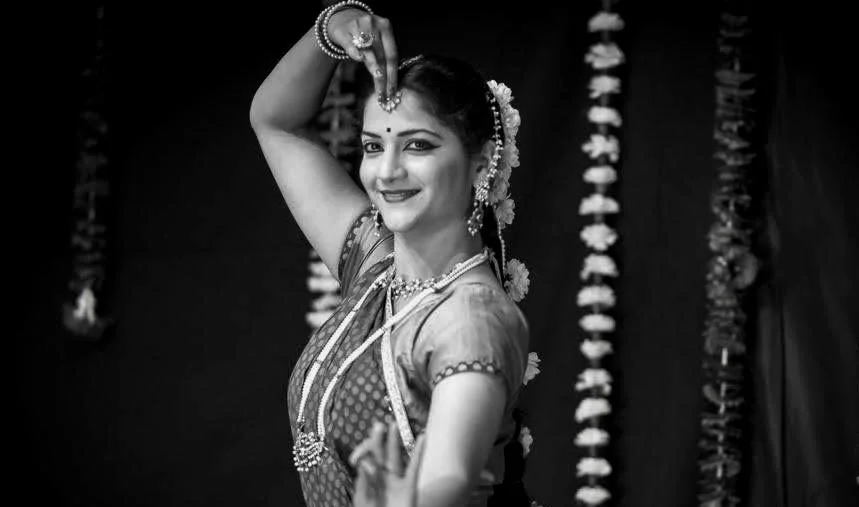
Photography by Bhushan Karnik.
Building a Space for Cross-Cultural Exchange
“While the form is deeply rooted in Indian aesthetics, it also carries an inherent openness.”
In September 2020, while still based in Pune, Sharvari established The Cultural Mosaic alongside her colleague and friend. What began as a digital platform for sharing their work gradually evolved into a dance school by 2022.
Alongside Kathak, the company has integrated French and German language and cultural learning as an inquiry into what it means for an art form to travel across cultures. Productions such as Le Horla (a French short film), Großer Zorn (based on a German poem), and The Songs of Nature, which drew on French, German, Chinese, Japanese, and Spanish traditions, have allowed Sharvari and her collaborators to ask how Kathak enters into dialogue with entirely different cultural and linguistic frameworks.
"Engaging with these distinct traditions has made me more aware of both the specificity and adaptability of Kathak," she reflects. "While the form is deeply rooted in Indian aesthetics, it also carries an inherent openness — its storytelling nature, rhythmic complexity, and emotional range allow it to connect across cultures in meaningful ways." That openness, she is careful to note, must be held alongside an equal commitment to classical integrity.
She also sees genuine creative potential in interdisciplinary collaboration with other dance forms, contemporary movement practices, and diverse musical traditions. These are not departures from classical integrity, in her view, but extensions of it. "Such collaborations can open new creative pathways for Kathak," she says, "allowing it to evolve in dialogue with other art forms while still remaining rooted in its classical foundation."
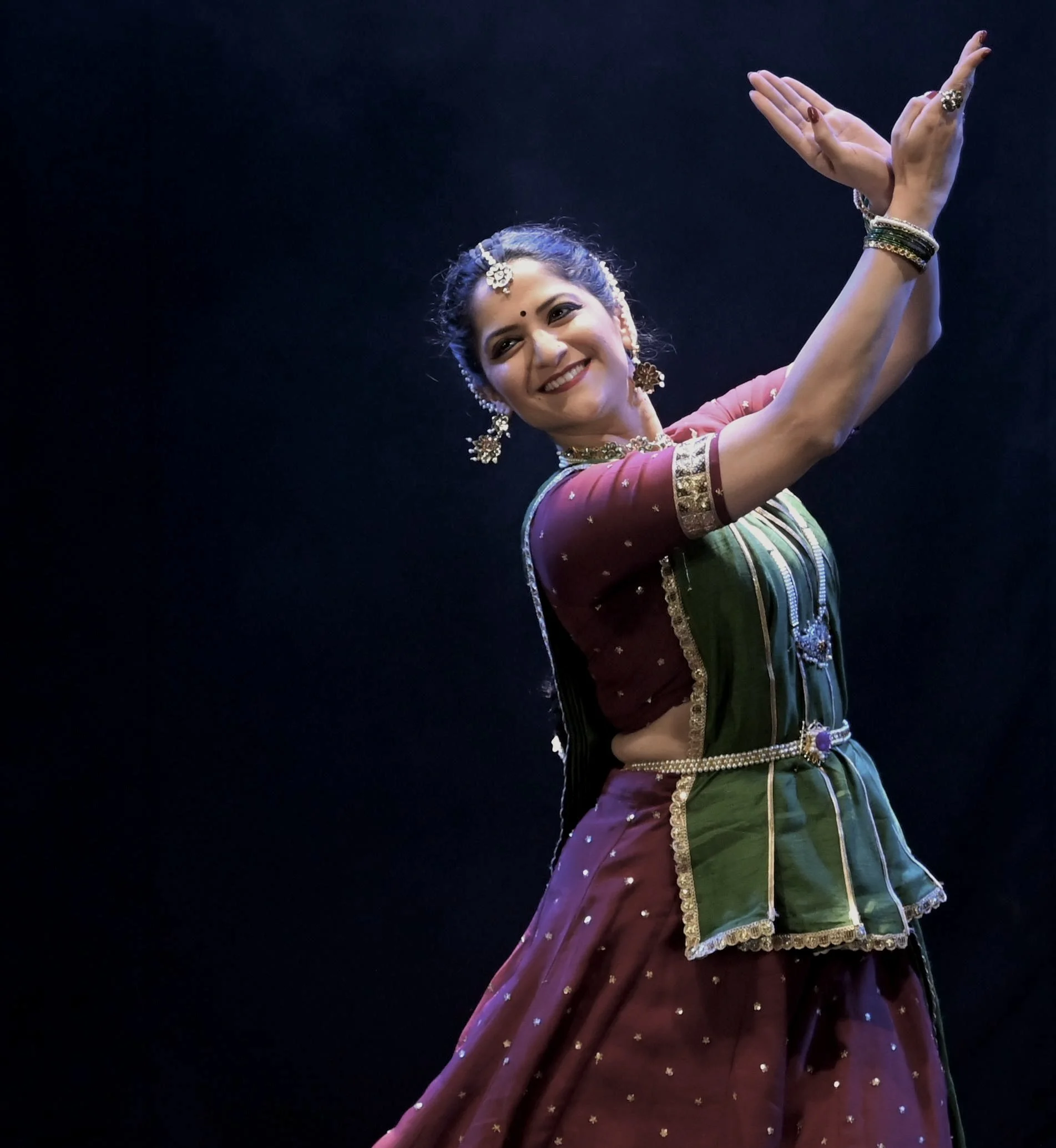
Photography by Kaustubh Atre.
A New Chapter in Melbourne
“In many ways, my role here has evolved into that of both a practitioner and a cultural bridge.”
When Sharvari moved to Melbourne, she carried with her the experience of performing across India, Europe, and Central Asia, and an open mind about what the city's appetite for Kathak might be.
What she found exceeded her expectations. She had anticipated interest in more accessible fusion forms, yet encountered students actively seeking traditional, structured training in classical Kathak. "There was a genuine curiosity and respect for the depth of the form," she says. What followed grew organically into a thriving community, many of whom have since joined her performing troupe.
The Victorian Premier's Diwali State Reception performance marked a significant moment in this chapter. For a company in its first year in Melbourne, the invitation to perform was a public acknowledgement of the forms place in Victoria's cultural landscape.
Teaching in Melbourne has also sharpened Sharvari's own practice in ways she had not anticipated. Communicating Kathak to students from diverse cultural backgrounds, explaining the form rather than simply transmitting it, has required her to examine its meaning and purpose with a renewed focus. "Living and working in Melbourne has made me more conscious and intentional about my practice," she says. "In many ways, my role here has evolved into that of both a practitioner and a cultural bridge."
That bridging has taken tangible form. The Cultural Mosaic has performed at events hosted by the Victorian Chinese Culture & Arts Association, and in 2024 took to the Melbourne Fringe Festival with Echoes of Her: A Kathak Celebration, a duet exploring womanhood through classical Kathak. Together, these performances speak to a practice that is actively reaching beyond the communities who already know the form.
The Future of Kathak in Melbourne
Reflecting on what more could be done to support Kathak locally, Sharvari points to a few areas. Consistent performance opportunities, both within and beyond the Indian community, are essential to expanding the form's visibility and reach. So too are more opportunities to invite established Kathak practitioners to perform in Melbourne, giving local students and audiences access to the form at its highest level, and fostering direct exchange with leading artists. Underpinning all of this, she suggests, is the need for financial and institutional support: funding for performances, workshops, and artist residencies that can help sustain a Kathak ecosystem in Melbourne over time.
Through her work with The Cultural Mosaic, Sharvari Bhide-Limaye is drawing in students and audiences who might not otherwise have found their way to Kathak. She is performing on platforms that extend the form into Melbourne's wider civic and cultural life, and doing so with the rigour of someone who has spent a lifetime inside the form.