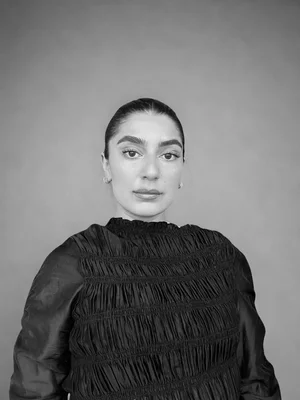
Bismillah Khan Yuva Puraskar Awardee Sanjukta Sinha on a Life Inside Kathak, The Art of Deep Training, and The Courage to Build Through Uncertainty
In conversation with Ahmedabad-based Kathak artist, performer, mentor and founder of Sanjukta Sinha Dance Company, Sanjukta Sinha reflects on a formation shaped by two of Kathak’s most formidable mentors, a teaching philosophy rooted in individual self-discovery that attracts students from around the world, and what it means to build through uncertainty.
Written by Simi Kaur
All images courtesy of Sanjukta Sinha
Photography by Devansh Zaveri
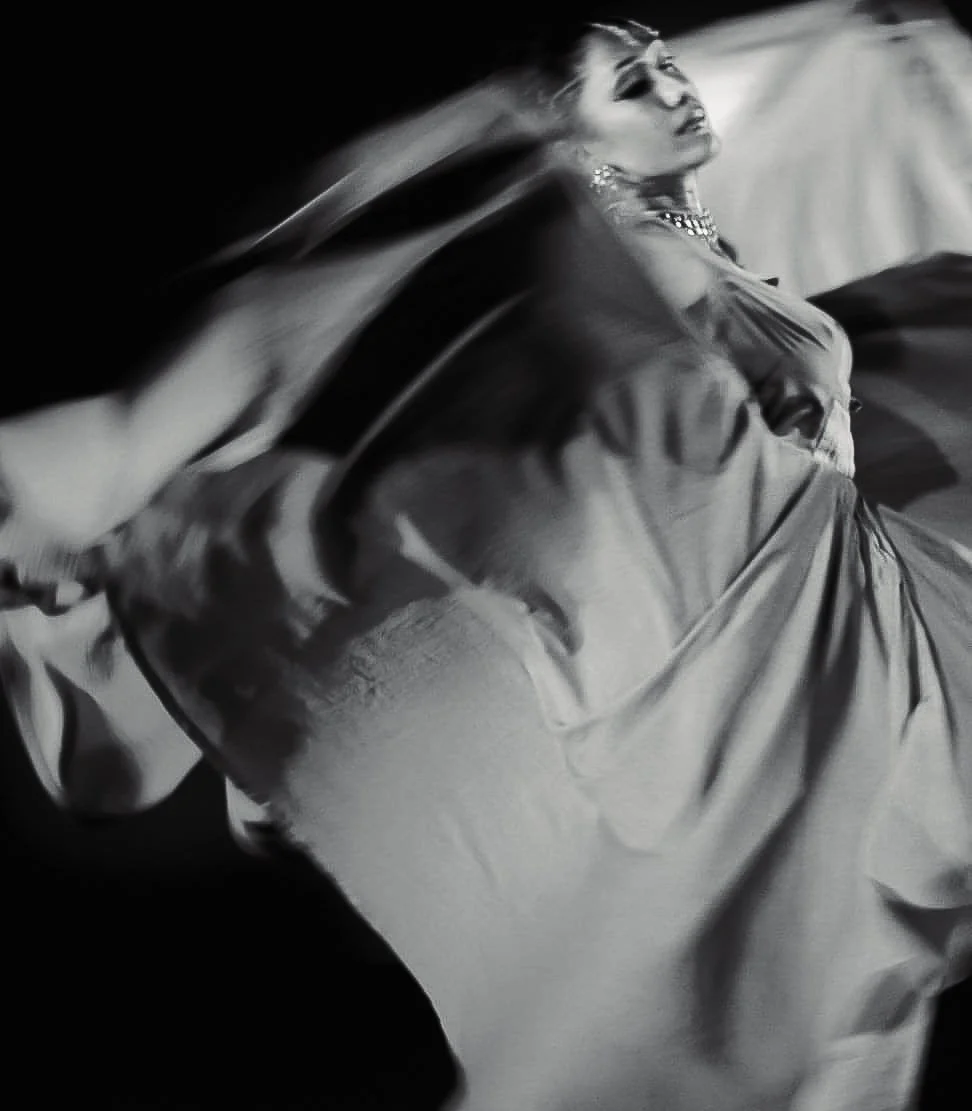
Sanjukta Sinha was just seven years old when she dedicated her life to Kathak. Born and raised in Lucknow — one of the three cities where the Kathak gharana tradition originates — she attended a one-month summer intensive with the late Birju Maharaj with no particular expectations. What followed, however, was the rest of her life. “Within one month of understanding the basics, I knew what the purpose of my life was,” she reflects. “I have continued my journey since then with the same spirit, spark, and commitment.”
Today, Sanjukta is a highly sought-after Kathak practitioner, performer, and mentor. Her intensives draw students from Europe, the UK, Japan, Canada, the US, Sri Lanka, and across India, while her Sanjukta Sinha Dance Company has become a hub for deeply considered Kathak practice in Ahmedabad. Ultimately, her story is one shaped by a succession of formative encounters: with great mentors, with boundless courage and determination, and with an art form she has spent decades learning to inhabit fully.
Two Formidable Mentors, Two Vast Worlds
“I could understand her language without words. I could understand her movements without her moving. There was something very special there.”
After that first summer, Sanjukta joined her first long term mentor, the late Arjun Mishra, in Lucknow. His training was, in her words, hardcore. Less like a dance class and more like the rigorous training of a martial art. “He was a tough master,” she says. “I think he knew he had a young student, eager with bright eyes, a strong mind, and demonstrable strength and talent for absorbing knowledge.” For more than eight years she trained with Mishra, building the physical and mental foundation that she credits entirely for her capacity as a performer today. “I still feel that if I’m able to physically hold myself and dance for hours without becoming breathless, it’s all because of him and his training.”
Photography by Devansh Zaveri
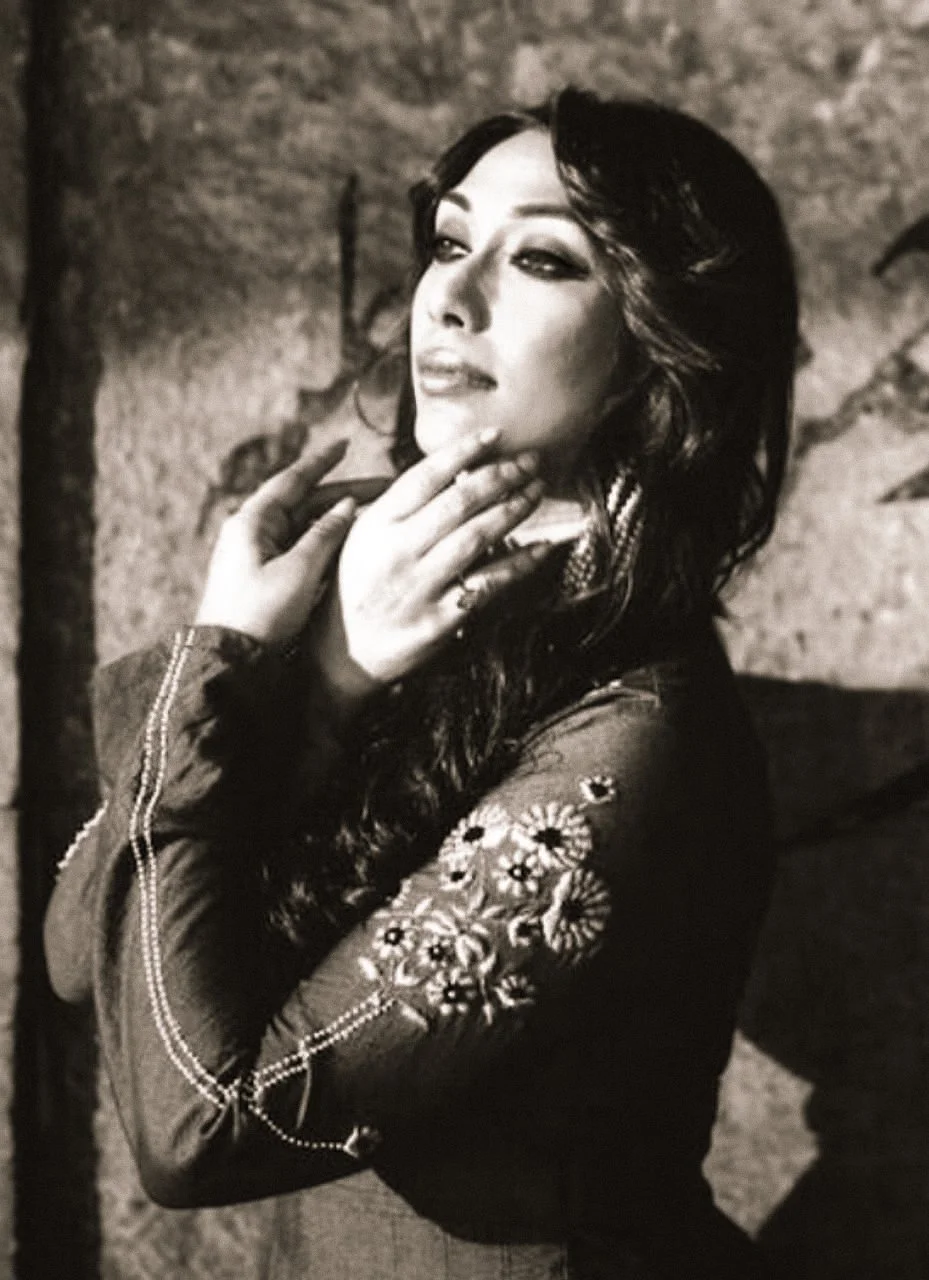
Her life changing move to Ahmedabad, to train with the late Kumudini Lakhia, recipient of the Padma Vibushan, opened an entirely different world to the young artist. Where training with Arun Mishra had conditioned her body and instilled technical discipline, Kumudini Lakhia expanded her sense of what dance and life more broadly could be and mean. “From the beginning I didn’t see it as a dance class only”, Sanjukta says. “The relationship I had with her was beyond guru and shishya.” She describes a connection that was deeper than a transactional student and teacher relationship, one based on an understanding that passed between student and mentor without words, and at times without even movement. “There was something very special there”.
What Kumudini Lakhia gave her, she reflects, was an awareness of the space between things; the silence between movements, the weight of what is left unsaid. “I knew I wanted to be a dancer, but I also realised that dance has a very wide scope and possibility. It is not just about the technique and the movement, but it is also about the space and time that is silent between the movements.” That understanding, of what lies in the pauses, not only the steps, became central to everything she has since created and taught.
A Philosophy of Teaching Rooted in Self Discovery
“Rather than suppress their natural instinct of movement and style, I try instead to nurture this in them.”
Sanjukta describes herself as having been fortunate to explore the trifecta of dance: as student, performer, and now mentor. The three, for her, are inseparable. “If I can be a good student then I can be a good teacher,” she says, a conviction that shapes every aspect of how she works with the dancers who come to her from across the world.
Photography by Devansh Zaveri
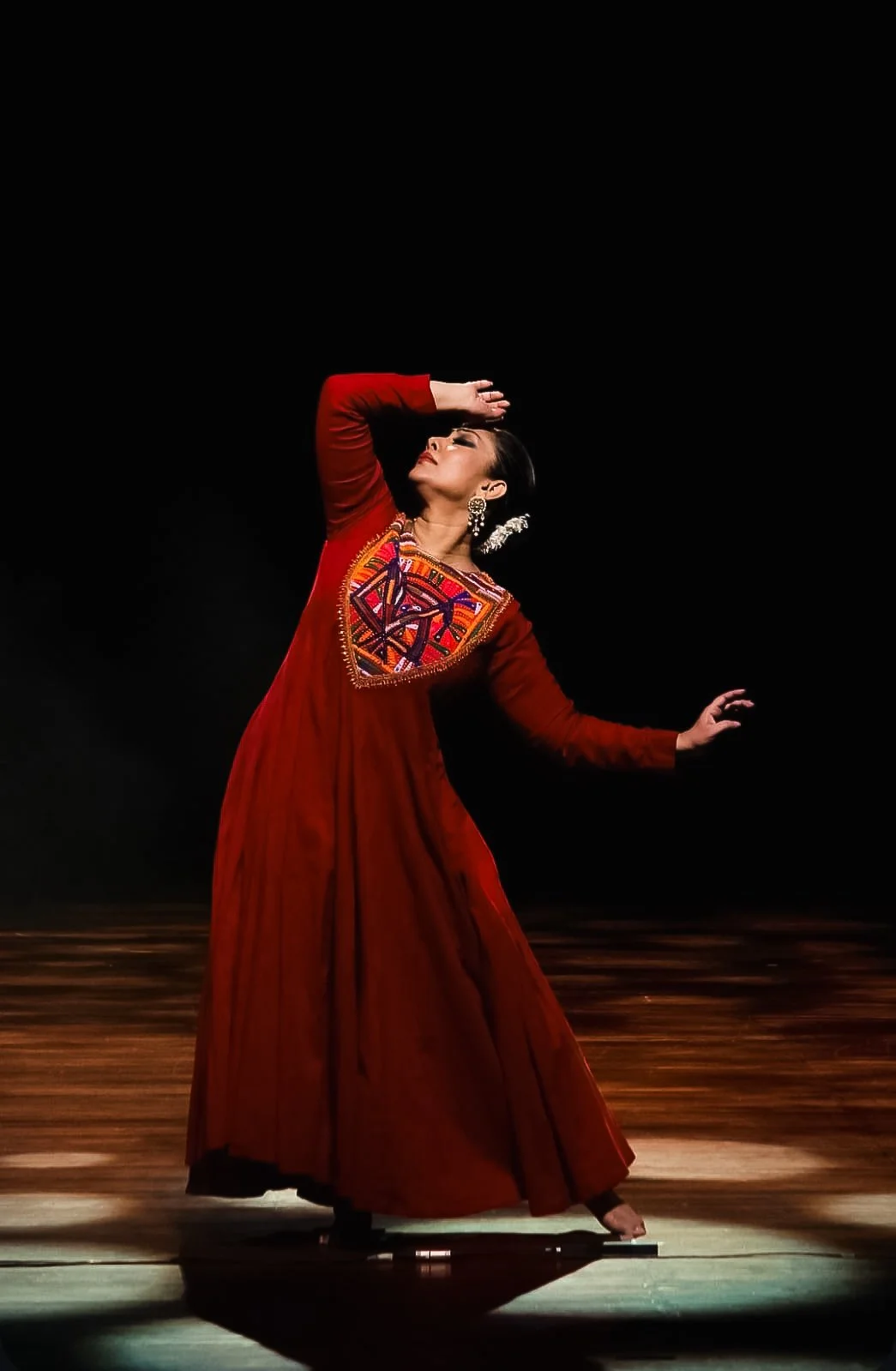
Her approach to teaching is deliberately unhurried. In the first two years of training, she gives students what she describes as full freedom; to explore their bodies, their physicality, their confidence. She does not direct them. She observes. “This is also my time of assessment to identify who is able to grow and evolve during this process.” Only once a student has moved through that initial phase of self-discovery does she begin to offer more directed, individualised feedback on technique and aesthetic.
Crucially, her corrections are always tailored to the individual body in front of her, not to an abstract ideal. “Rather than suppress their natural instinct of movement and style, I try instead to nurture this in them.” The more rigorous technical formation comes later, when the mind and body are ready to receive it. “I don’t like to force anything on students if they are not ready. Having joy in the movement, theoretical knowledge and the process is much more important.”
It is a pedagogy that reflects the lessons of her own formation. Through years spent inside the guru-shishya parampara, she absorbed a vital understanding: the right conditions for learning cannot be rushed, and excellence emerges not from suppression but from patient, attentive cultivation.
The Courage to Build Through Uncertainty
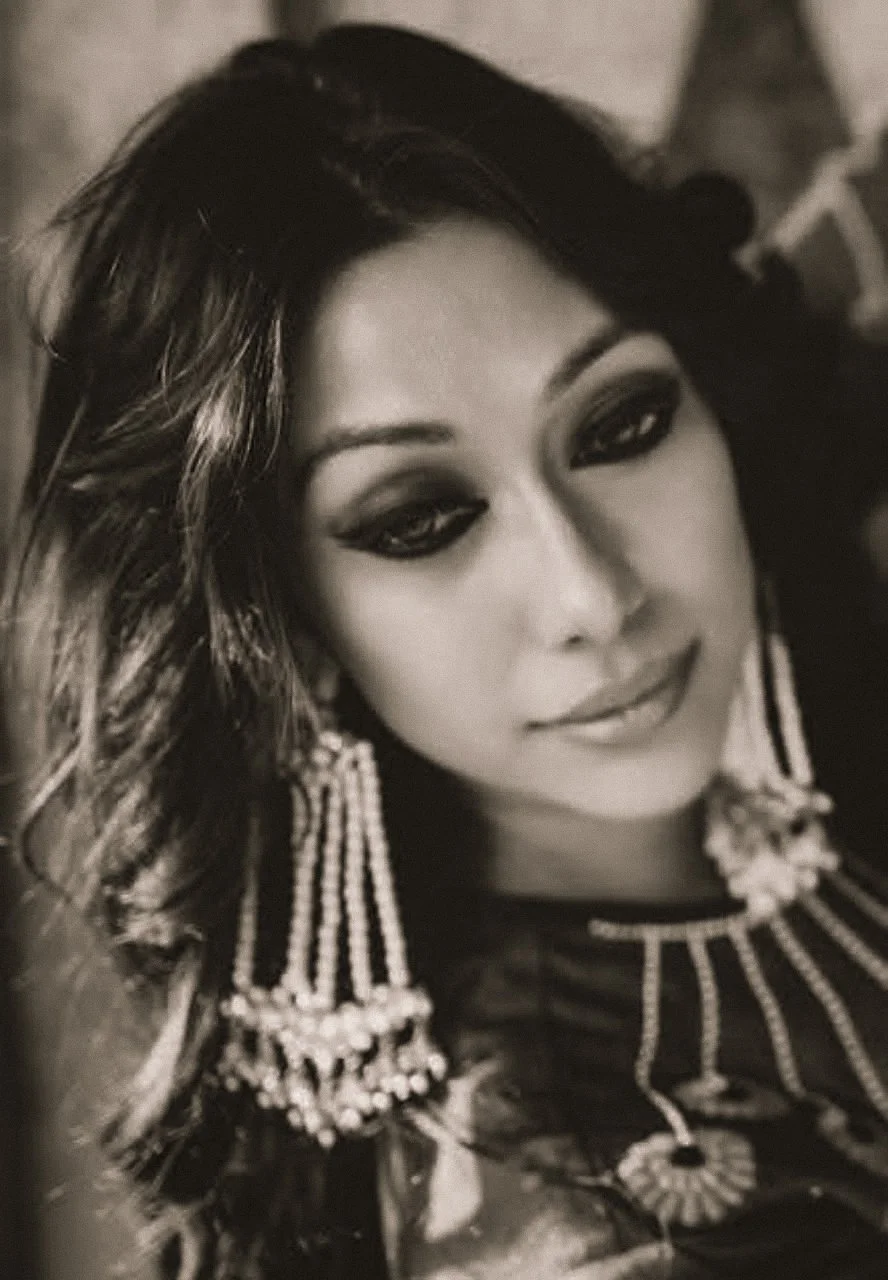
“I have never been a conventional thinker - and that’s why I’ve been able to overcome what might be daunting for most.”
Photography by Devansh Zaveri
Sanjukta is clear that artistic risk has been a constant in her life, rather than something she encounters occasionally. In fact, she has lived with it since leaving Lucknow more than two decades ago. “That fear of failing and the uncertainty of the future are not things I have given much thought to,” she says. “Even when I was younger, I was always eager to take a chance on myself without fearing the outcome.”
The most significant test of that disposition came when she made the decision to establish her own studio and company. The timing was, by any conventional measure, poor. The world was in the grip of the COVID-19 pandemic, uncertainty was everywhere, and the expected response was to hold back, to save, to wait. Sanjukta did the opposite. With limited financial resources and an absolute belief in what she was building, she invested everything she had. “I had a deep belief and instinct that it would work out,” she reflects. “If I had not had that courage and faith that no matter what happens I will start over from scratch and build again, I never would have been able to get through that time.”
Today, Sanjukta Sinha Dance Company operates from a larger studio, with students learning both in person and online from cities and countries across the world.
“If you’re not evolving and growing with time, what is the point of holding on to the form?”
The Weight of Recognition
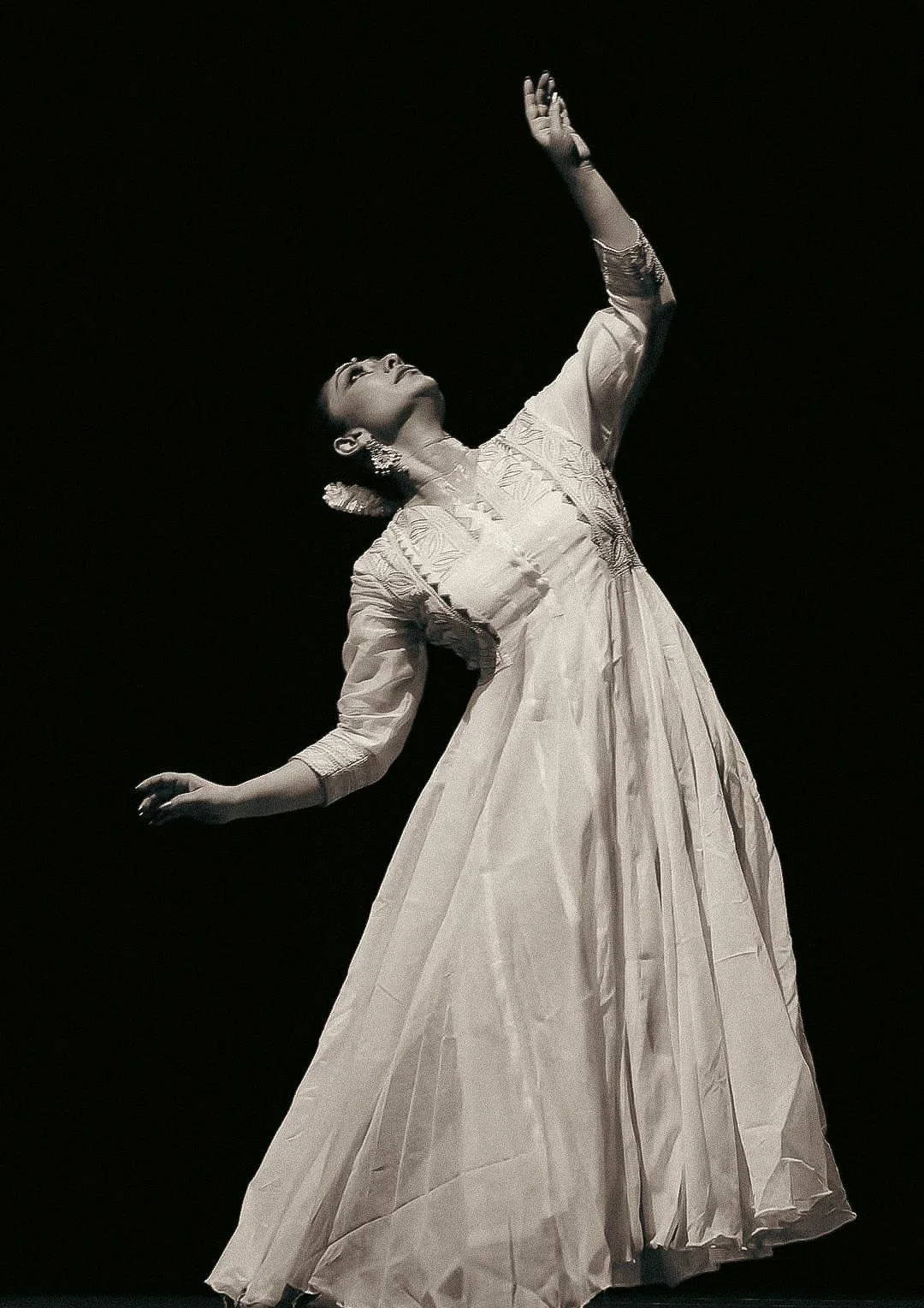
“I considered it a big responsibility as a performer and dancer, and it only deepened the seriousness and commitment I had towards the form.”
Photography by Devansh Zaveri
Sanjukta is the recipient of many awards recognising her artistic achievements and excellence, including among them, the Ustad Bismillah Khan Yuva Puraskar. The award is India’s national recognition for outstanding performing artists, awarded by the Sangeet Natak Akademi. Sanjukta received this award at a young age, at a time when she was still discovering herself as a performer. Her response to the recognition was characteristic: celebration but more importantly a deepening of responsibility and humility. “I never saw it as an award that would necessarily bring me recognition and shows,” she says. “I considered it a big responsibility as a performer and dancer, and it only deepened the seriousness and commitment I had towards the form.” She is candid about the risks that come with major recognition - the potential for it to distort an artist’s relationship with their work, to shift focus from the practice to the platform. “I think sometimes big awards, stages, and recognition can have a negative impact on the mindset of a dancer.” She was glad, she says, that she did not allow it to have that impact on her. Instead, it encouraged her to continue on her path with greater dedication. The award became not a destination, but a call to go further.
What the Next Generation Must Hold Onto
Looking ahead, Sanjukta’s hopes for the next generation of Kathak artists are rooted in the values that have sustained her own practice across decades: patience and consistency.
Sanjukta acknowledges we live in a time that tends to reward immediacy, visibility and pace, but despite this she hopes the students of the next generation are able to hold on to the values of patience and consistency - at least because they served her. To continue with the same practice every day, she reflects, requires both. Not just the excitement of a beginning, or the recognition of an achievement, but the quiet, unglamorous commitment of showing up - again and again - to the work.
It is, in many ways, the same spirit that carried a seven-year-old girl through a summer intensive in Lucknow and into a life she has never once looked back from. For Sanjukta Sinha, Kathak has always been less about what it offers and more about what it asks — and she has spent a lifetime, joyfully, answering.