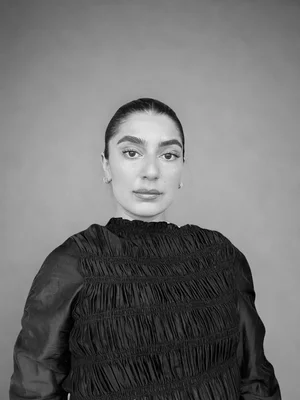
The New York-based artist, choreographer, and Director of Barkha Dance Company reflects on ancestral lineage, intentional practice, and navigating the NYC arts ecosystem.
Written by Simi Kaur
All images courtesy of Barkha Patel
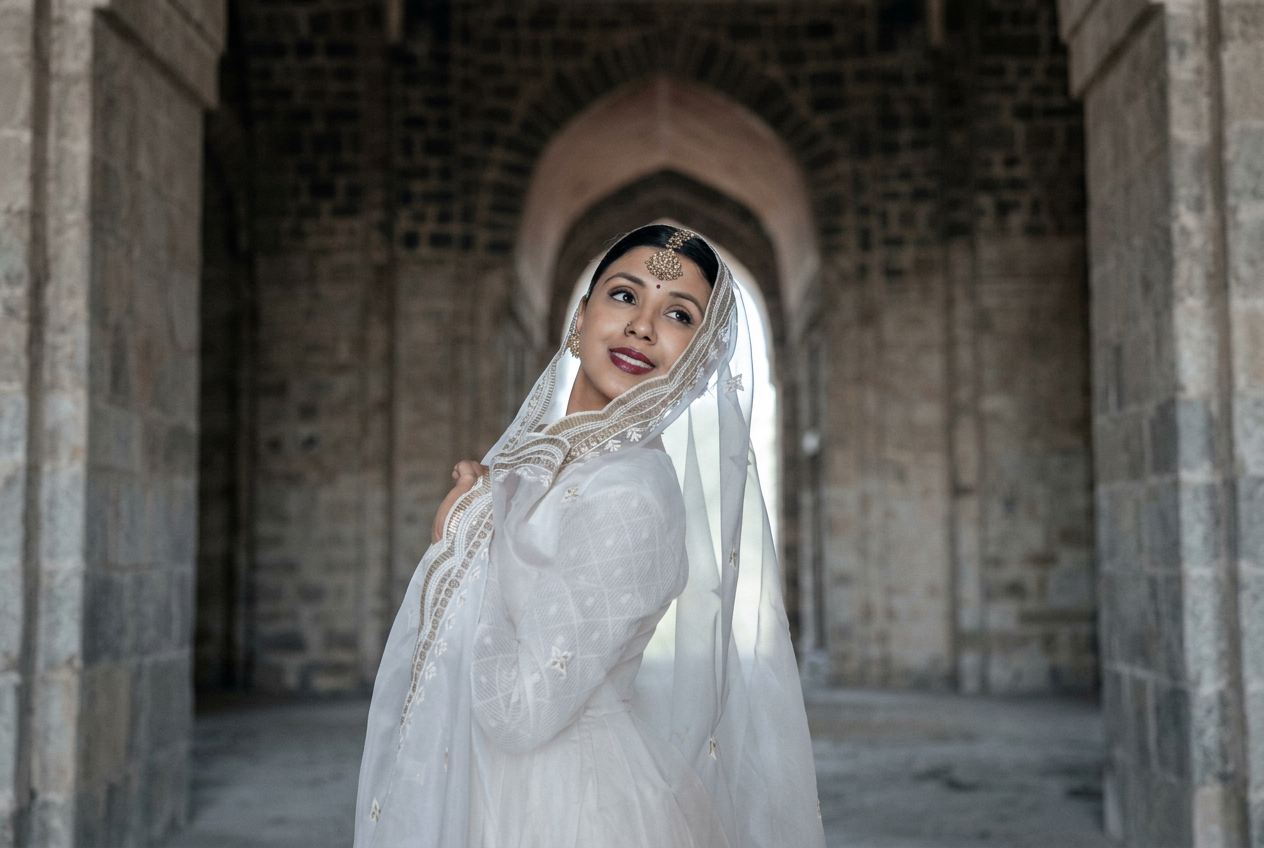
Photography by Rishi Raj
Patel is the Director of Barkha Dance Company, based in New York City, where she has built a practice that moves between performance, choreography and education. She is a Princess Grace Award recipient, a Juried Bessie Award recipient, and has presented her work at venues including Dance Theatre Harlem, Jacob’s Pillow Inside/Out, Joyce Theatre, Metropolitan Museum of Art and the Lincoln Centre. Her work is searching, built from sustained inquiry, and rooted in deep questions about what the body knows and what it carries.
A Practice Formed in New York
Patel began her training in Kathak as a child under the guidance of Rachna Saran, and it was there that she first began to understand what kind of artist she wanted to be. She trained with Saran for nearly two decades before stepping away from formalised study and moving into independent practice, drawing mentorship from different senior artists along the way. From there, the work of building an artistic identity began in earnest. New York, with all the pressure it places on artists to be visible, to produce, to justify their practice, was the environment she had to navigate while doing it.
“Rachna-ji gave me that foundation that I needed to then explore what I wanted to do as an artist.”
New York is a city that places particular pressure on artists to be visible. Workshop culture is prolific, and with it comes a pressure to share work online, to demonstrate what you can do, to keep pace with a landscape full of extraordinary dancers all doing the same. Feeling the weight of that, earlier in her career she found herself choreographing in ways that were oriented toward proving her technical capabilities, toward showing the city who she was and what she could do. “There used to be a time where New York City really got to me,” she says. “I was like, oh my God, I have to show everybody who I am, what I do, what I’m capable of. And sometimes those feelings still creep up.” What has since shifted is a growing conviction to be a thinking artist, one that requires something the city doesn’t easily give: quiet. “I want to sit with the body and its intelligence and let it reveal. I think you need quiet for that.”
“There used to be a time where New York City really got to me… I have to show everybody who I am, what I do, what I’m capable of.”
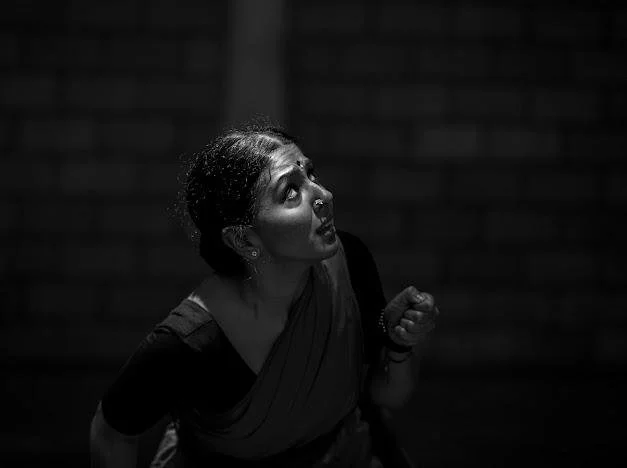
Photography by Unknown
The shift has meant becoming more interested in the quality of inquiry behind the work than in output alone. “I think I’m in that phase of my practice where I want to focus on the kind of thinker I am,” she says.
This perspective has been deepened by the environment around her. New York’s experimental and elite dance world, makers working across forms and asking bigger questions about what movement can hold and express, has pushed her to ask larger questions about what her own practice can embody. “Those things have had a further influence on me in the last ten years,” she says. Being surrounded by makers who think seriously about experimentation and expansion has given her a framework for asking deeper questions of her own practice.
Inside the Choreographic Process
This reflective orientation directly informs her choreographic process, which remains rooted in sadhana—the sustained study of movement. “More than putting out the things that I’m working on,” she says, “I like to just be in the process of the dance and the journey of it in the body.” For Patel, every work must carry a core logic and conceptual inquiry.
“More than putting out the things that I’m working on, I like to just be in the process of the dance and the journey of it in the body.”
Patel describes how she actually builds movement: a phrase begins intuitively, one movement following another, not necessarily in a predetermined order. “I don’t make steps in some kind of order,” she says. “I kind of wait to see what arrives on its own.” Once the phrase has form, she returns to it and begins layering: pauses, textures, stops. Sometimes a rhythmic structure comes first; sometimes it emerges from the movement itself. There is no fixed sequence, and how she enters a piece tends to depend on the piece itself.
Patel speaks of open-ended residencies as something that has significantly shaped the kind of work she has been able to make. “Open-ended residencies are of course my favourite,” she says, “because there’s so much time to play and ask why, and old ideas that just stand still, and there’s no finality to it.” The contrast she draws is with outcome-oriented residencies, where the pressure to arrive somewhere, to complete and deliver, changes the nature of the inquiry itself.
Informing all of this is a set of questions that have shaped her inquiry in recent years. What does it mean to go beyond form? What does it mean to select only certain aspects of a practice for a particular work? What is a contemporary expansion? And if she speaks of something as specific as the Kathak spine, is she actually engaging it? These questions tend to live inside the process itself, shaping what she reaches for and what she leaves out.
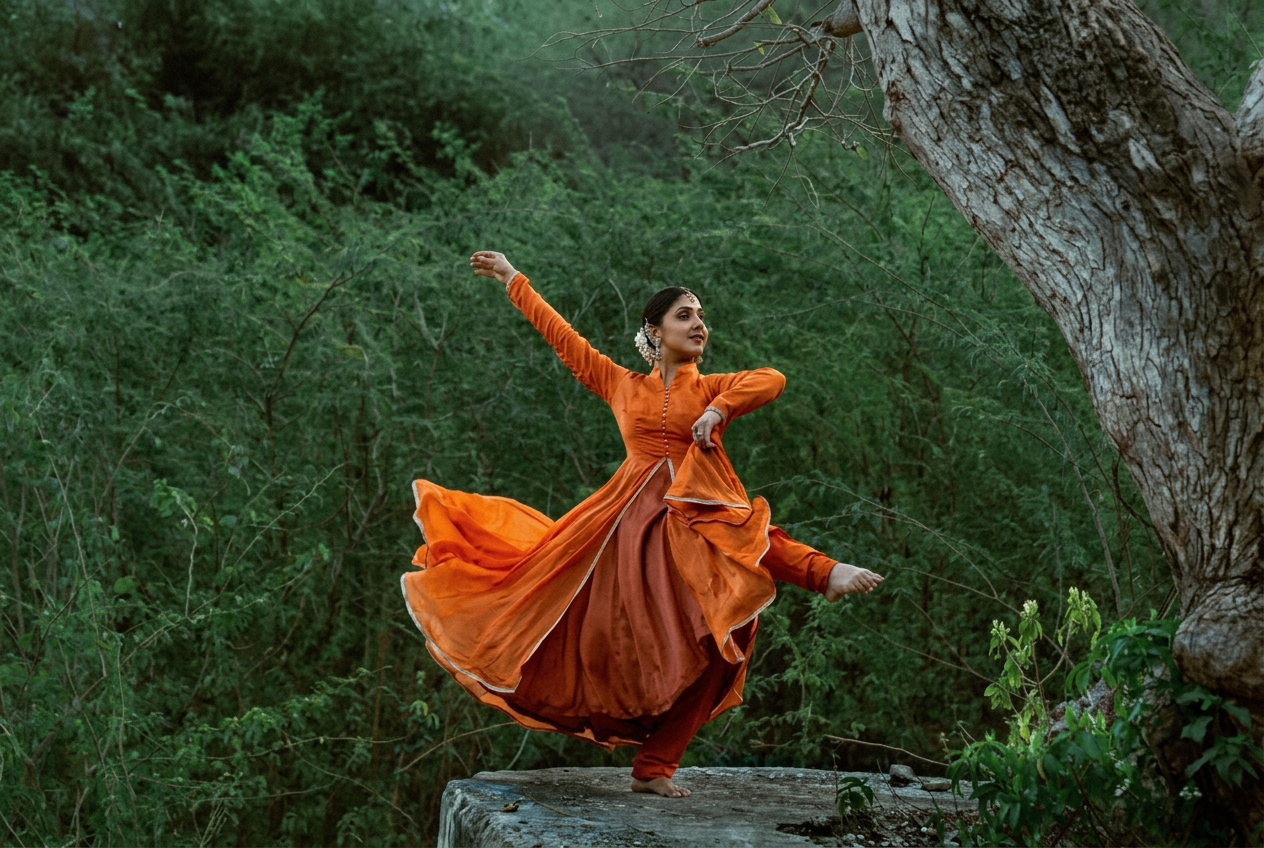
Photography by Rishi Raj
If there is a through-line in Patel’s choreographic thinking, it is a commitment to the body as something more than a vehicle for technique. The body, she says, is intelligent: it holds memory, things we don’t always have language for. In her work, this is not a poetic conceit but a structural principle. The body, in her choreography, is a site of inquiry: it knows things the mind has not yet articulated, and the choreographic process is partly a matter of learning to listen to what it already carries.
The Body as a Site of Inquiry: icchā
This philosophy culminates in her latest work, icchā (Sanskrit for desire or longing), which premiered at BMCC Tribeca Performing Arts Center in September 2026. The 60-minute interdisciplinary solo weaves kathak, garba, original music, and original set design to investigate vasanas—unfulfilled longings that transcend generations through bloodlines. In the piece, Patel is visited in a dream by her maternal ancestors, who choose her to express, release, and fulfil desires shaped by survival, loss, intimacy, and the denial of embodied selfhood.
“What does it mean for the body to be an ancestral site of history, for the body to hold memory and for it to reveal itself?”
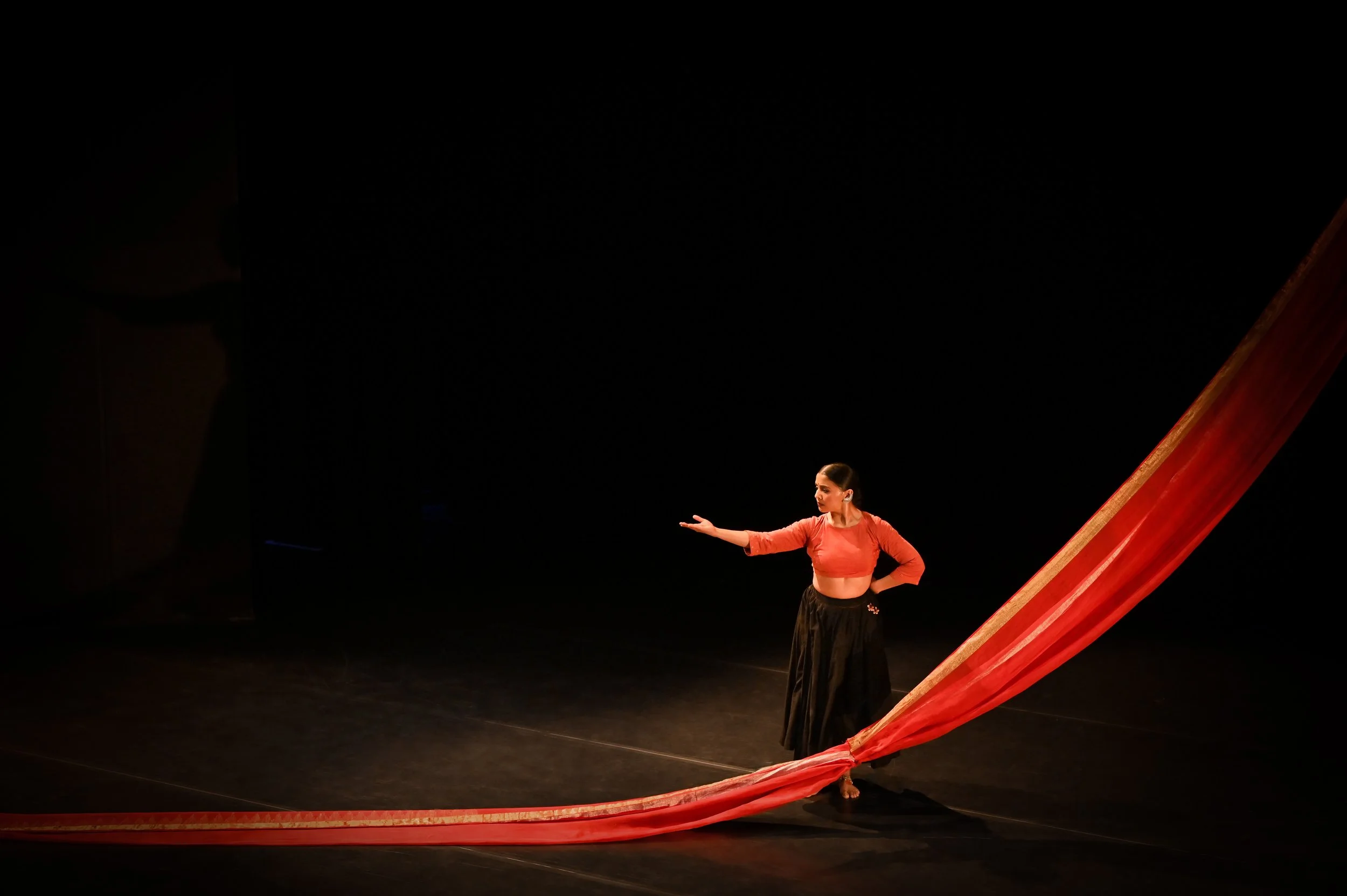
Photography by Sarabjeet Matharu
The work is rooted in a recognition that matrilineages are most often unnamed, interrupted, and absorbed into the histories of patriarchs. What icchā asks is who we carry within us, and what in the body might be their unfinished reaching. “What does it mean for the body to be an ancestral site of history,” she asks, “for the body to hold memory and for it to reveal itself?” The research has taken Patel into her own family history, where she has found fragments rather than whole stories. She describes the work as a somatic shraadh: an ancestral reverence for secret tragedies that have dissolved with passing time. The question of how to hold those fragments, whether to imagine into them or to return to herself, to what it means as Barkha to carry this knowledge, remains deliberately open, for her and for the audience. “Can the viewer be their own artist in the process,” she asks, “and create meaning for themselves, versus being a passive observer?”
The choice of garba as a second movement language is not arbitrary. Patel has participated in garba all her life: in her family, in community, across India during the festive season. It is a form that belongs to her cultural context in a way that Kathak, for all her decades of training in it, does not. Though Kathak is the movement language through which she knows how to make and think, garba is closer to the ancestral body she is trying to reach. Icchā exists precisely at that intersection: the form she trained in meeting the form she grew up inside.
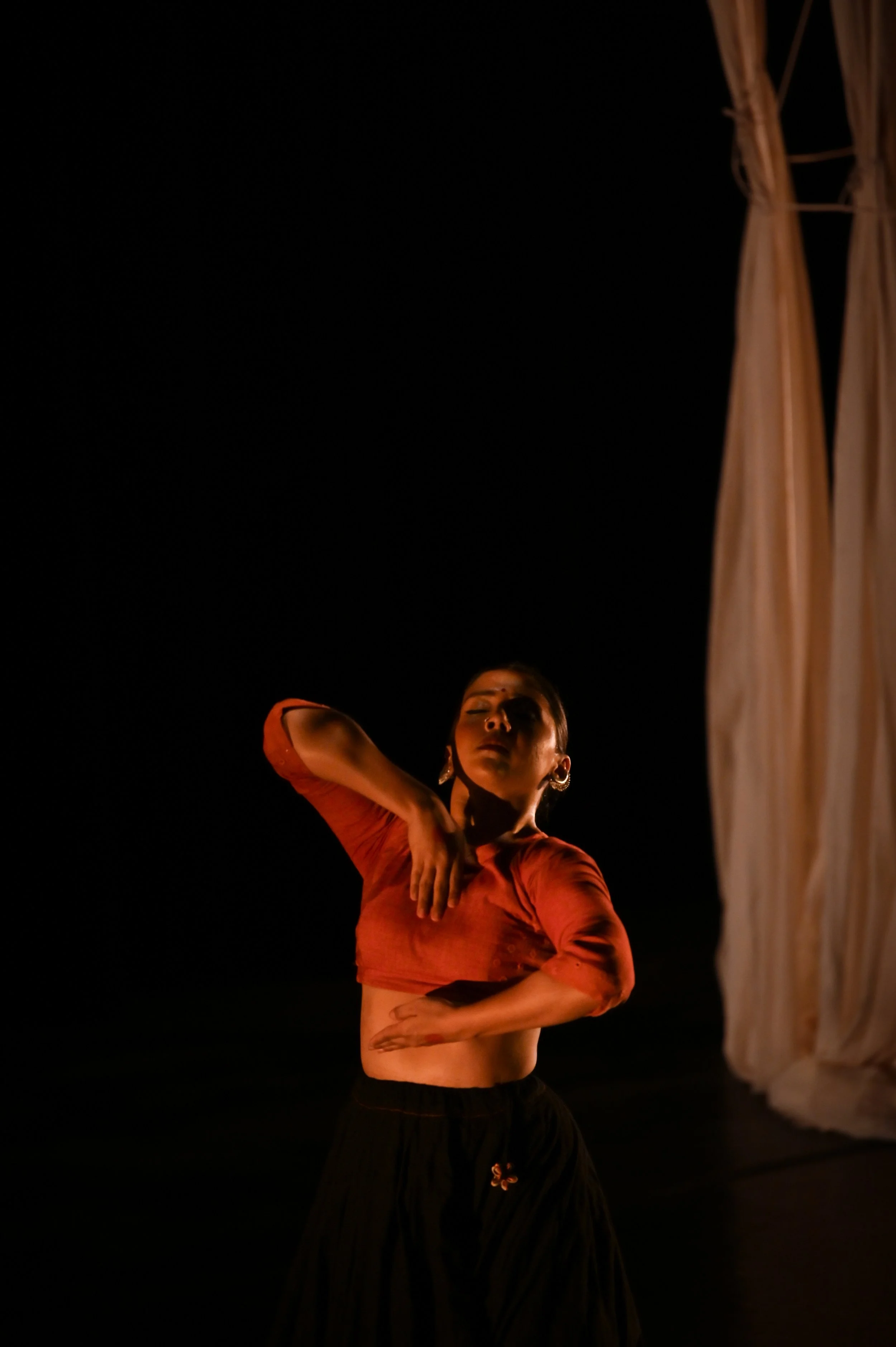
Photography by Sarabjeet Matharu
The meeting of Kathak and garba in icchā is not a fusion experiment. The garba that enters the work is there because it carries its own vasanas, the accumulated memory of a form danced by women in ritual and community contexts across generations. There is a parallel to be drawn between the circular, devotional momentum of garba and the circular, unresolved quality of longing itself. The two forms do not merge. They inform each other.
Recognition and What It Means
As her inquiry has deepened, so too has her critical acclaim. Winning the Juried Bessie Award in 2023 significantly broadened her reach, leading to a tour across New York State supported by NYS Danceforce. However, touring outside New York City also brought the gap between audience expectations and her practice into sharper focus, highlighting persistent exoticisation around Indian classical forms.
The Princess Grace Award followed. After decades of training as a dancer, of putting the work into the body, the award was a solidification of that effort. “It just solidifies the effort that I have put in this body,” she says, “and that what it continues to put out is beautiful and it’s worth it.” The award has also opened up the ability to nominate others: as a Princess Grace awardee, she can put forward other practitioners of Indian classical dance, and she takes that seriously. The field, she feels, is one where practitioners are not always seen, where the work is assumed to be niche in ways she does not agree with.
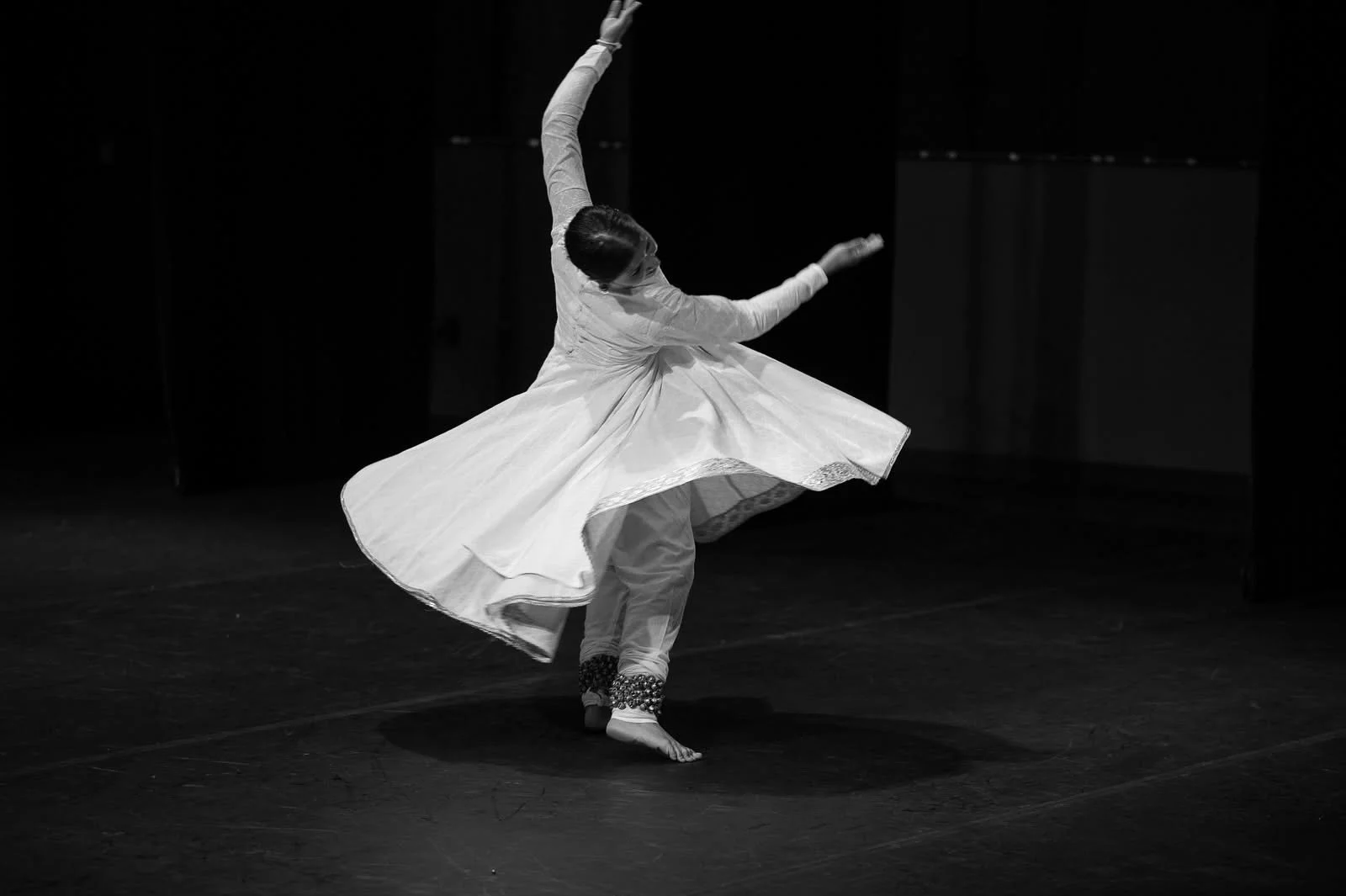
Photography by Scott Levy
She is also candid about the complexity of operating within funding structures, particularly at a moment when diversity in granting has become a stated priority. She does not know, she says, exactly what goes into any given decision: whether the work is being recognised on its own terms, or whether other considerations are at play. What she does know is that the funding and mentorship has enabled her make things. And that, for now, is what matters.
A Future of Lateral Peer Exchange
Looking ahead, Patel envisions a more interconnected future for Kathak practitioners. While traditional guru-shishya lineages have preserved and transmitted the art form across generations, she notes that they can sometimes hinder lateral peer exchange. She advocates for an ecosystem where artists engage in open dialogue, challenge the form, and let artistic inquiry drive connection.
“Do we really care about the art, do we really care about the questions that we’re all asking within a practice?”
Patel is thoughtful about what might become possible if the lineage based foundation is honoured while reaching beyond it. In her experience, practitioners can find themselves working in parallel, deeply committed to their own practice, but rarely in sustained conversation with one another. What she hopes for is an ecosystem where artists at every stage can engage with each other's work honestly, ask harder questions of the form, and where the depth of a practice is what opens doors. "Do we really care about the art," she asks, "do we really care about the questions that we're all asking within a practice?"