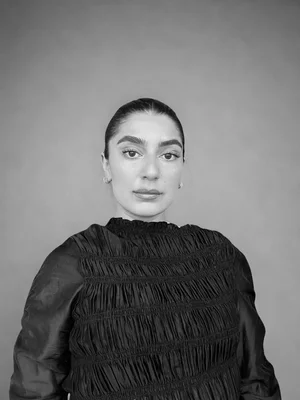
Ruchi Sanghi on 25 Years of Kathak in Sydney and the Theatrical Ambition Behind Her Productions
In conversation with Sydney-based Kathak artist, choreographer and founder of Ruchi Sanghi Dance Company, Ruchi Sanghi, on building a Kathak school from the ground up in Sydney, the theatrical ambition behind her company's productions, and what it takes to present a classical form with integrity in a multicultural city.
Written by Simi Kaur
All images courtesy of Ruchi Sanghi
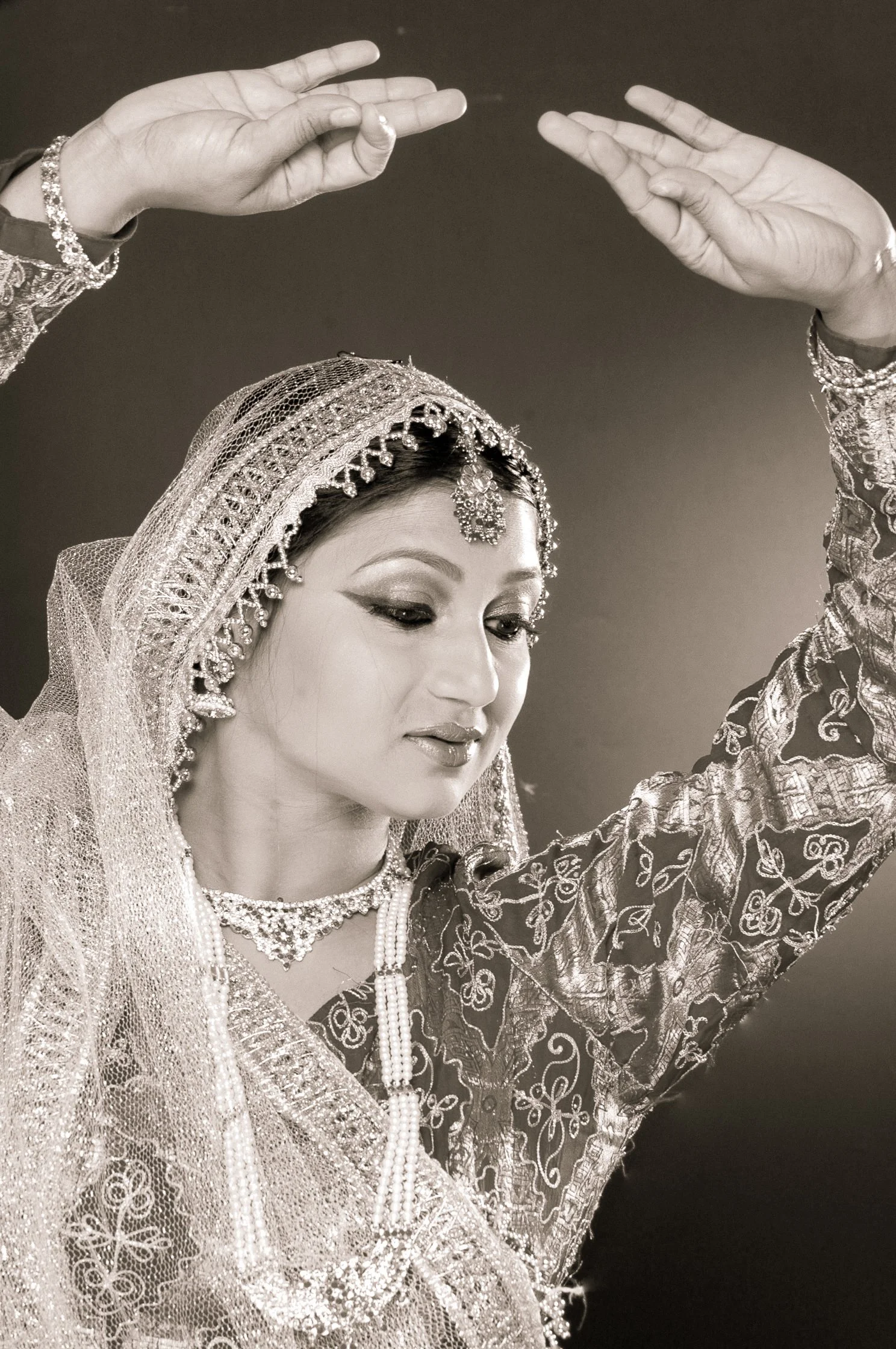
Photography by Unknown, India.
When Ruchi Sanghi established her company in Sydney in 2000, there were very few Kathak dancers or institutions in the city, and within Indian, particularly North Indian communities, there was little culture of training children and youth in the form. What followed was not simply the founding of a school, but the patient, determined work of building an entirely new space for Kathak in a city where it had almost no foothold. Twenty-five years later, that work has taken the form to the stage of the Sydney Opera House, into the galleries of the Art Gallery of New South Wales, and into the lives of students and audiences who might never otherwise have encountered it.
Ruchi's own journey with Kathak began at the age of four, a relationship with the form that has, over the course of her life, moved from childhood training to deep artistic formation, to the responsibilities of transmission and leadership.
Early Artistic Formation
Ruchi's early training took place at Kathak Kendra in New Delhi, where she studied under Reba Vidyarthi and later with Kundanlal Gangani, two significant figures whose grounding in the form shaped her foundational understanding of its grammar and rigour. It was her subsequent move to Mumbai, however, and her training under the legendary Kathak dancer and choreographer Gopi Krishna, that proved the most formative chapter of her development. She trained intensively under his guidance until his passing in 1994, years in which, she says, her artistic voice truly took shape.
After moving to Australia, she continued to return to India regularly to deepen her training under prominent Kathak masters, maintaining the thread of direct transmission that she now considers essential to the integrity of what she teaches and creates. That commitment, to staying rooted in the form as it was passed to her, even while working far from its country of origin, has remained the guiding principle of everything the company has built.
Building From the Ground Up
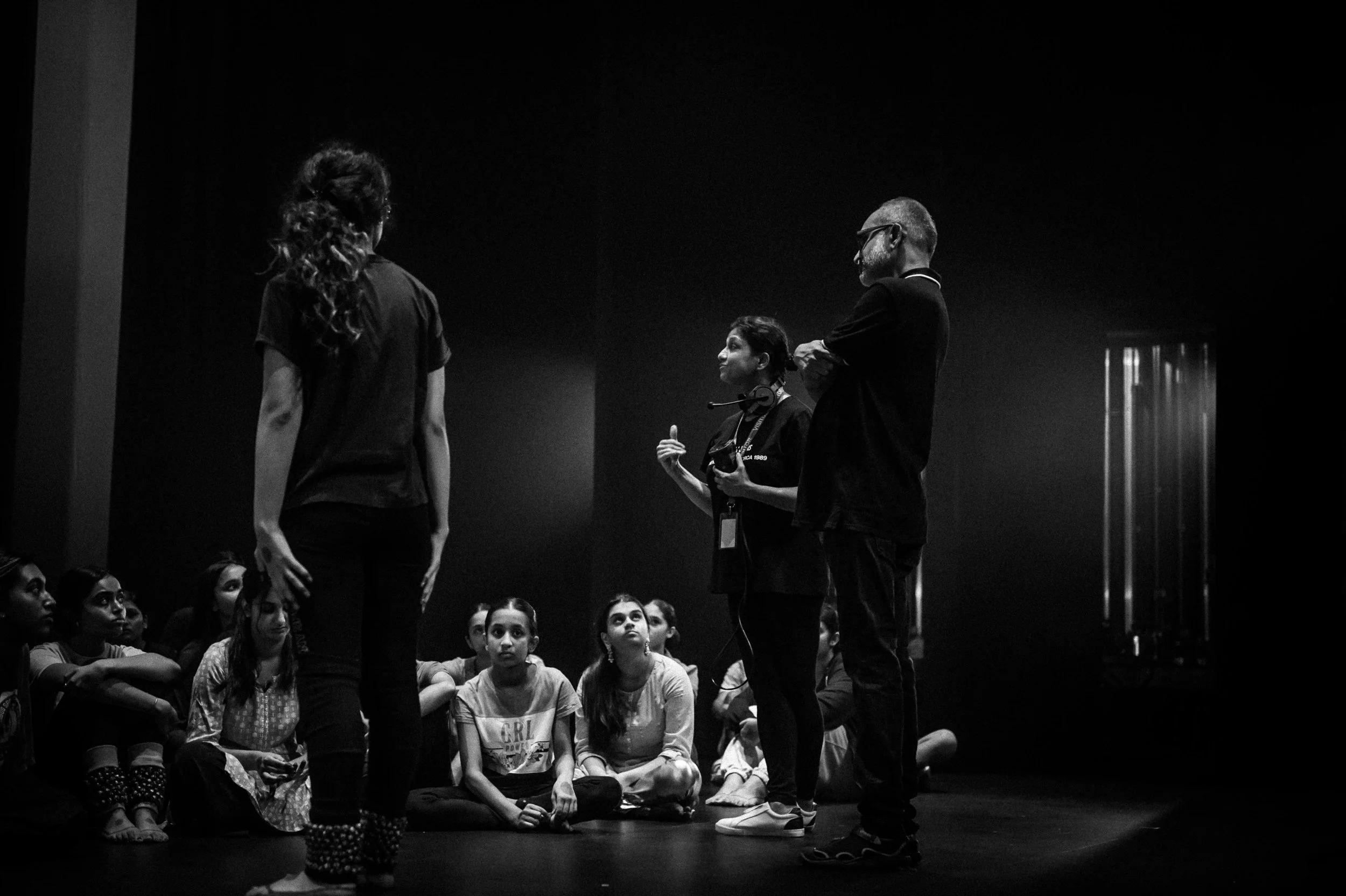
Photography by Dusk Devi.
“We had to actively create awareness, generate interest, and build a space for Kathak.”
Building a Kathak school in Sydney in 2000 required something beyond artistic vision: it required a willingness to start from almost nothing. The challenge was not simply logistical but cultural: many people, including those within Indian communities, were unfamiliar with the form. There was no existing audience to build on, no established network of practitioners, and no roadmap for what a dedicated Kathak school in Australia might look like.
"We had to actively create awareness, generate interest, and build a space for Kathak," Ruchi reflects. And yet that very absence carried within it an opportunity. Being among the first to establish a dedicated Kathak school in Sydney meant that the company could define its own terms, developing a pedagogy, a repertoire, and a relationship with audiences that was shaped by the specific context of a multicultural Australian city.
That context has influenced both how Ruchi teaches and how she creates. In teaching, it has meant placing a strong emphasis on building foundational understanding and cultural appreciation, particularly for students who come to the form without prior exposure. In choreography, it has encouraged her to develop a presentational approach that makes Kathak accessible for audiences who are encountering it for the first time, without compromising its classical essence.
Twenty-five years on, the company has built a strong and loyal following within Sydney’s South Asian community, and has steadily extended its reach into wider public life through performances at major cultural venues, collaborations with art galleries and local councils, and appearances in documentary film. “It has been a challenging but deeply rewarding journey,” she says. “Over time, we have received immense appreciation, support, and opportunities that did not seem possible when we began.”
The Theatrical Vision: Kathak at Scale
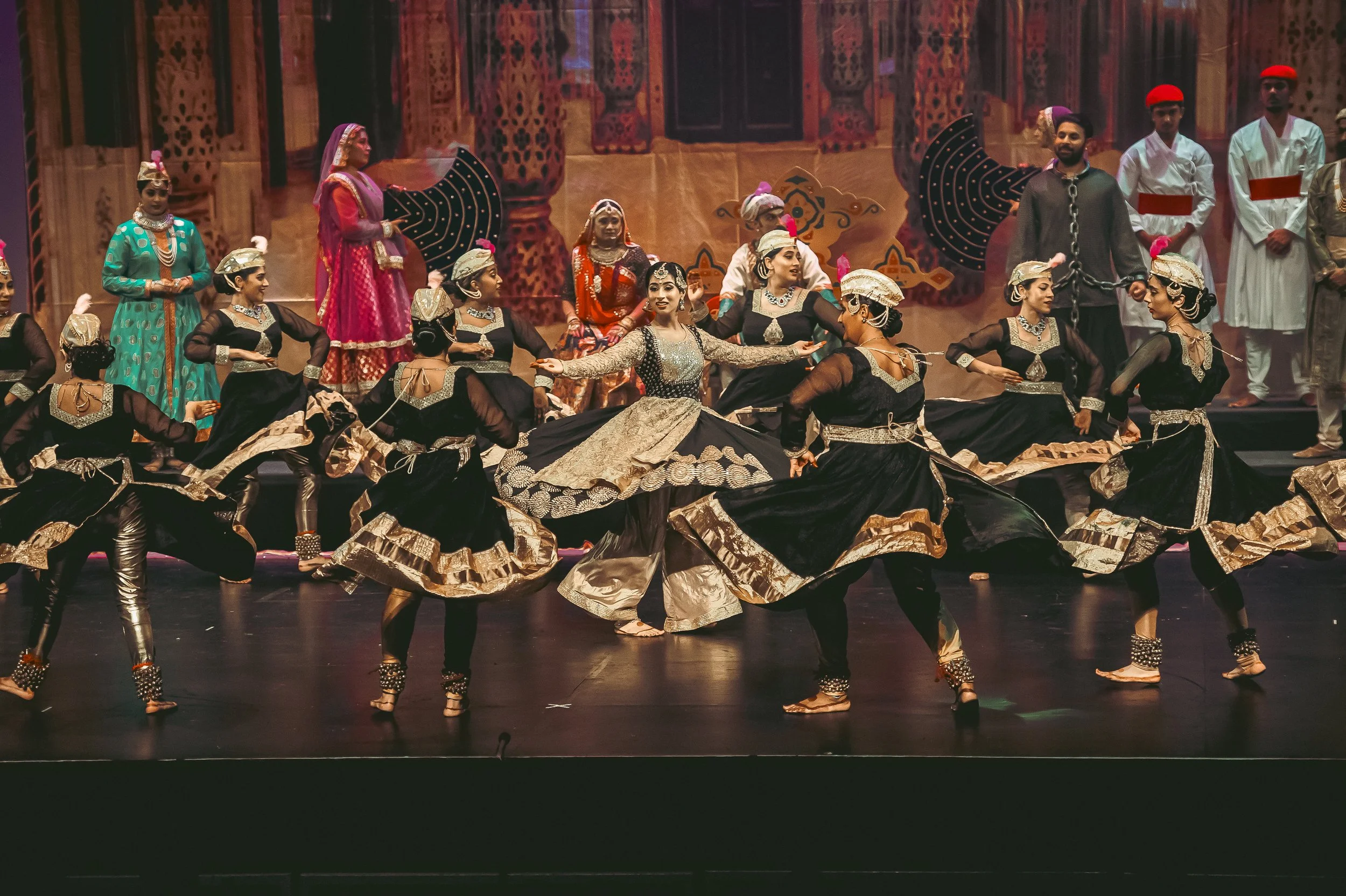
Photography by Dusk Devi.
“When we first began creating productions of this scale, it was a creative risk, but the audience response was overwhelmingly positive.”
Central to the company's artistic identity is a commitment to large-scale theatrical production, an approach that Ruchi has developed over decades and that has become one of the most distinctive aspects of her work. Drawing on period dramas and classic narratives, she has created productions that bring together elaborate costumes, large-scale sets, original music composition, and immersive staging within the framework of classical Kathak.
Her work has consistently gravitated toward stories of grandeur and emotional depth, productions built around narratives such as Devdas and Mughal-e-Azam, which she describes as having always fascinated her for their scale and their natural alignment with Kathak's capacity for storytelling. "I often find myself drawn to tragic narratives," she notes, "as they tend to leave a lasting emotional impact on the audience."
This theatrical ambition has been sustained over time by a core team of collaborators, writers, directors, music composers, lighting designers, and production technicians, many of whom have worked with the company for more than two decades. That depth of creative relationship has allowed the company to push into increasingly ambitious territory, exploring what Ruchi describes as the full theatrical potential of the form.
When the company first began producing work at this scale, it was genuinely uncharted ground. "It was a creative risk, as this approach had not been widely explored," she reflects. The response from audiences, however, was clear, and it has shaped the direction of the company's work ever since.
Throughout, her creative decisions have been guided by a commitment to the principles of the Natyashastra, ensuring that the grammar, expression, and essence of Kathak are not diluted even as the presentation evolves. "The balance lies in retaining authenticity while shaping narratives and productions in a way that allows new audiences to connect with the form meaningfully."
Reaching New Audiences
Photography by Dusk Devi.
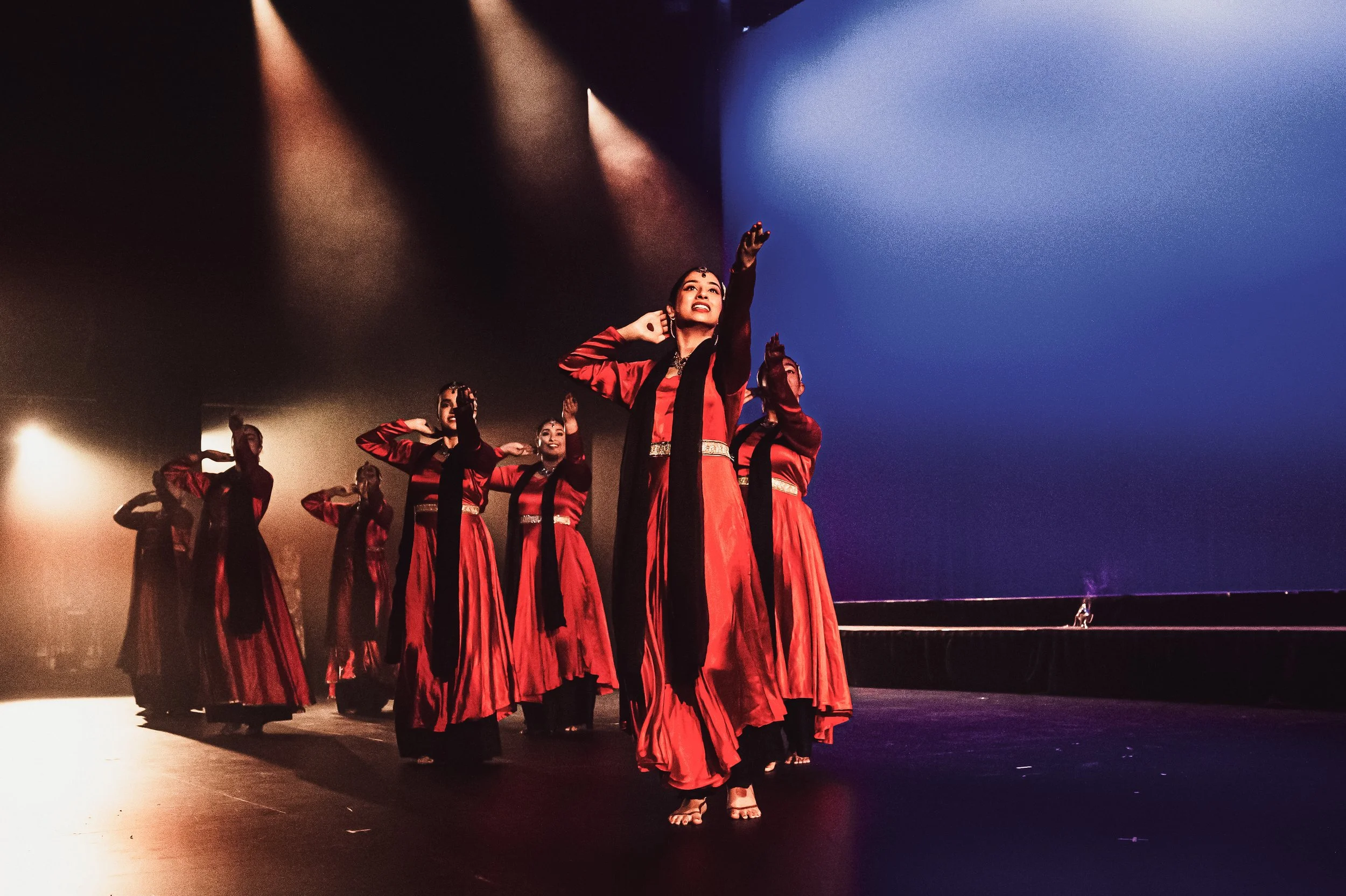
One of the most organic and meaningful ways the company has built its audience has been through its own students, who have, over the years, brought their own multicultural networks and communities into contact with the work. "This organic connection has been one of the most meaningful ways in which new audiences have discovered Kathak," Ruchi reflects, "through familiarity, relationships, and shared cultural spaces."
At the same time, she is clear-eyed about how much further there is to go. Despite the ground the company has covered, Ruchi believes there is still significant work to be done in establishing Kathak as a recognised mainstream art form in Australia. Central to this is the need for more prominent platforms to bring international Kathak artists to Australia. When Aakash Odedra presented Songs of the Bulbul at the Sydney Opera House, it offered a glimpse of what that kind of visibility can do, not only for those already within the Kathak community, but for wider audiences encountering the form for the first time. "Experiences like these play a powerful role in deepening awareness, appreciation, and recognition of Kathak," she says.
Sustaining Excellence over Time
“Maintaining the sanctity and purity of Kathak has remained central to our work.”
Photography by Dusk Devi.
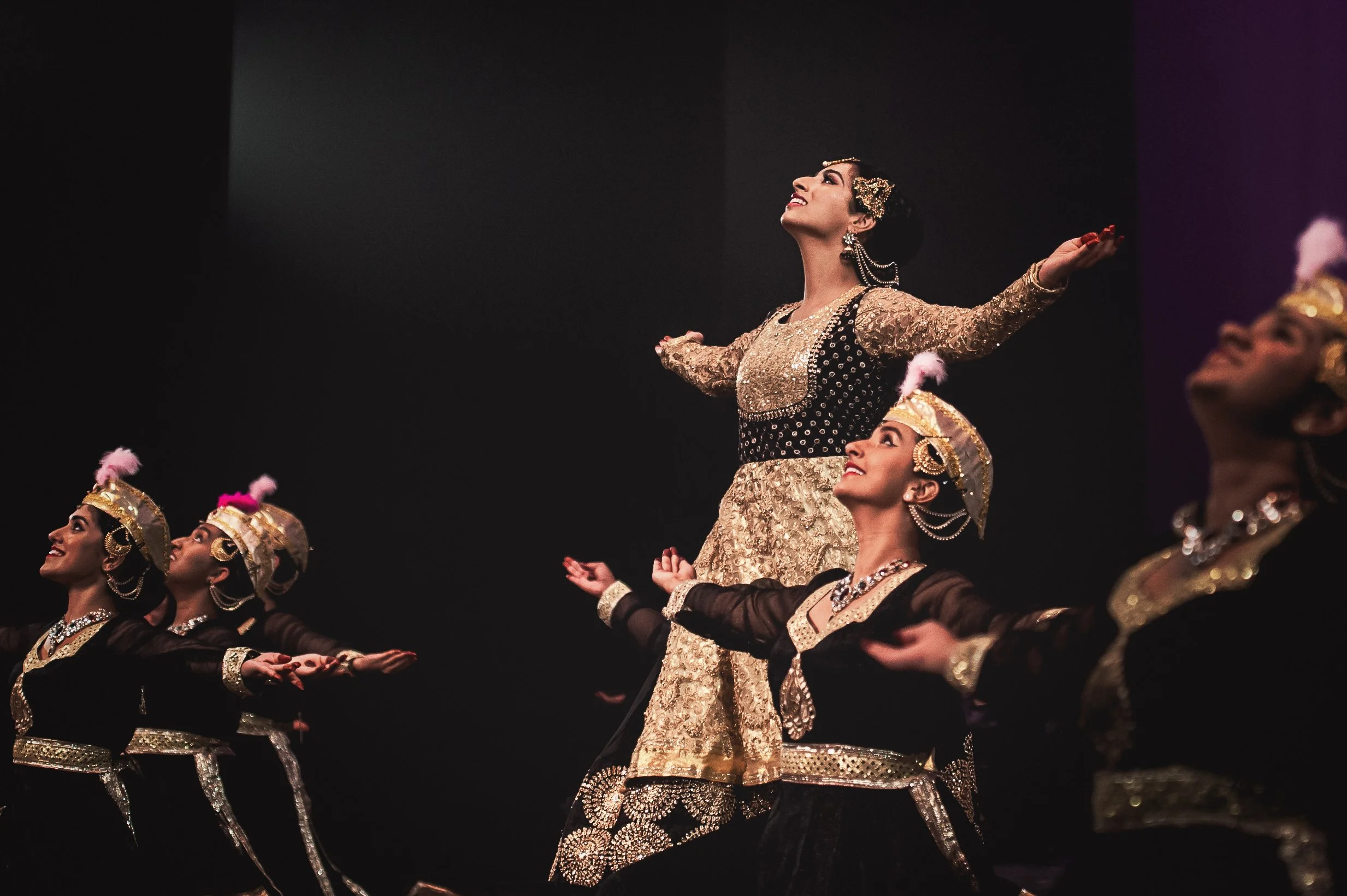
Underlying everything the company has built is a foundational commitment to rigour, a deliberate refusal to take shortcuts in the name of accessibility or speed. This has meant resisting the pull to direct and design for immediate appeal, and instead maintaining the depth of training and understanding that Ruchi believes is the only true basis for excellence.
"We have consistently aimed to maintain an international standard of training, with a strong emphasis on rigour and discipline," she says. "Maintaining the sanctity and purity of Kathak has remained central to our work, even as we continue to create and collaborate." It is this commitment, she believes, to strong foundational training, depth of understanding, and respect for the form, that sustains quality over time and across generations.
Looking ahead, Ruchi sees a growing opportunity for Kathak to evolve within global contexts while remaining true to its roots, and sees institutions as having a vital role to play in that evolution. Not simply as training grounds for skilled dancers, but as spaces that cultivate informed and thoughtful artists capable of carrying the form forward with integrity.