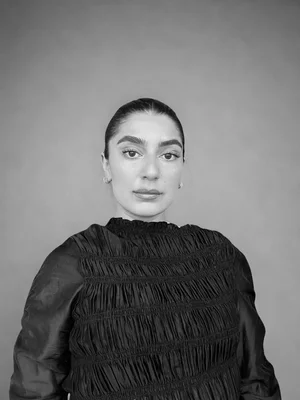
Tulani Kayani-Skeef on Practice, Stillness, and the Evolving Language of Kathak
In conversation with Choreographer, Multi-Disciplinary Artist and Kathak Educator, Tulani reflects on Kathak as meditation, discipline and the responsibility of carrying tradition forward.
Written by Simi Kaur
All images courtesy of Tulani Kayani-Skeef
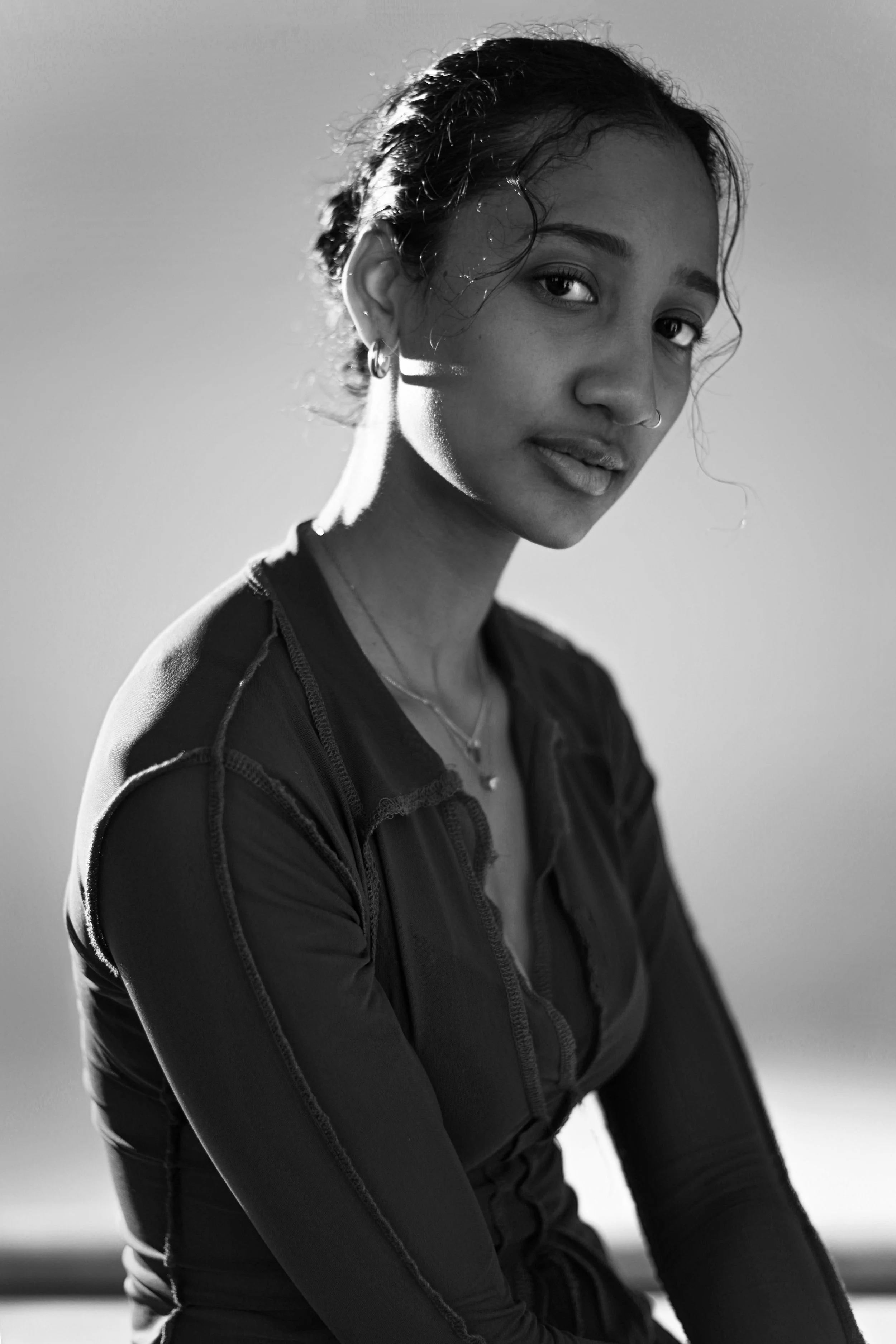
Photography by Jack Thomson.
At this stage in her journey, UK-based Kathak artist and educator Tulani describes her relationship with the form as one rooted in peace. “Dancing Kathak at this point in my life is an act of self-love,” she reflects. “Unlike many other dance forms that put a strain on the body, Kathak is so natural that it feels good — it is an act of beauty.” In a fast-paced world, Kathak has become a place of stillness for her, a state where attention narrows to movement alone.
Finding Kathak
Tulani’s path to Kathak was not immediate. Growing up in the UK, her early dance training followed a familiar trajectory — ballet, tap, and contemporary — forms she eventually fell out of love with. It was her mother who later took her to a Kathak class at The Bhavan Centre, inspired by her own connection to the form during pregnancy. Tulani recalls falling in love with Kathak almost instantly.
Her early training under Shri Abhay Shankar Mishra grounded her in a strong traditional technique, something she emphasises as essential for anyone wishing to go far within the form.
Rhythm at the Centre
Music has always been central to Tulani’s life. The daughter of percussionist and composer Eugene Skeef, she was exposed from a young age to a wide range of musical traditions — South African jazz, Western classical music, and Indian classical music among them. This immersion fostered a deep sensitivity to rhythm, which Kathak went on to nurture and refine.
“The ongoing nature of Indian classical rhythmic time cycles never fails to put me in a trance,” she shares, describing rhythm as a grounding force within both her practice and her wider artistic life.
Becoming an Artist
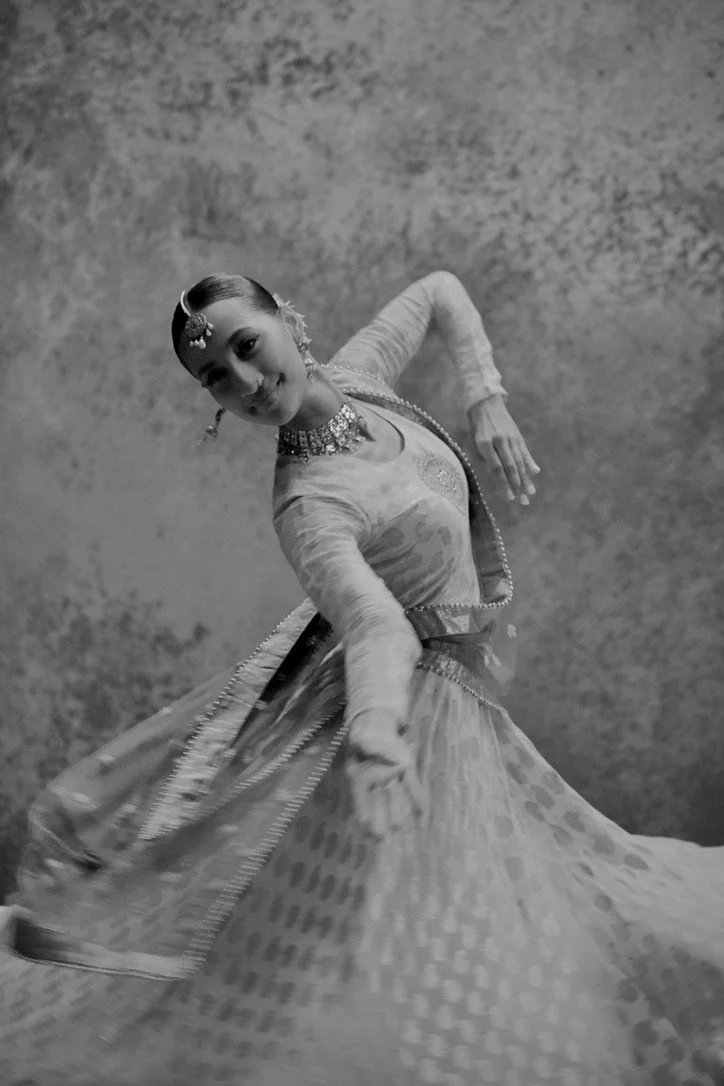
Photography by Morgan Williams.
“Didi taught me how to be an artist, not just a dancer.”
A significant turning point in Tulani’s development came through the Centre for Advanced Dance Training (CADT), where she met her guru, Sujata Banerjee MBE, whom she affectionately refers to as didi. Attending CADT every half-term, Tulani found herself challenged in new ways — technically, creatively, and artistically.
Alongside Kathak classes, the programme exposed her to contemporary dance and creative exploration, allowing different aspects of her identity to surface. “I found parts of myself in contemporary that I wouldn’t have found through Kathak,” she says, a discovery that continues to inform her work today.
One moment from her audition with Banerjee remains especially vivid. Asked to perform a Kathak composition of her choice, Tulani selected a piece she knew well and felt confident performing. Tulani recalls that following her presentation, Banerjee asked her to repeat it, but to imbue it with power.
That challenge shifted something fundamental for Tulani. Kathak, she realised, was not only about preserving compositions exactly as taught, but about inhabiting them fully. “Didi taught me how to be an artist, not just a dancer,” she reflects.
Beyond the Form
Since then, Tulani has continued to explore movement beyond Kathak while remaining anchored within it. She has worked with contemporary choreographers, revisited ballet classes, and participated in projects that pushed her out of familiar structures.
In 2023, she co-created You With U with Mithun Gill and Aishani Ghosh, a work examining societal conditioning. Although the collaborators came from different dance backgrounds, they developed a shared movement language that blended their styles. Even in these interdisciplinary contexts, Tulani notes that her movement vocabulary consistently stems from Kathak — a grounding force in how she moves and creates.
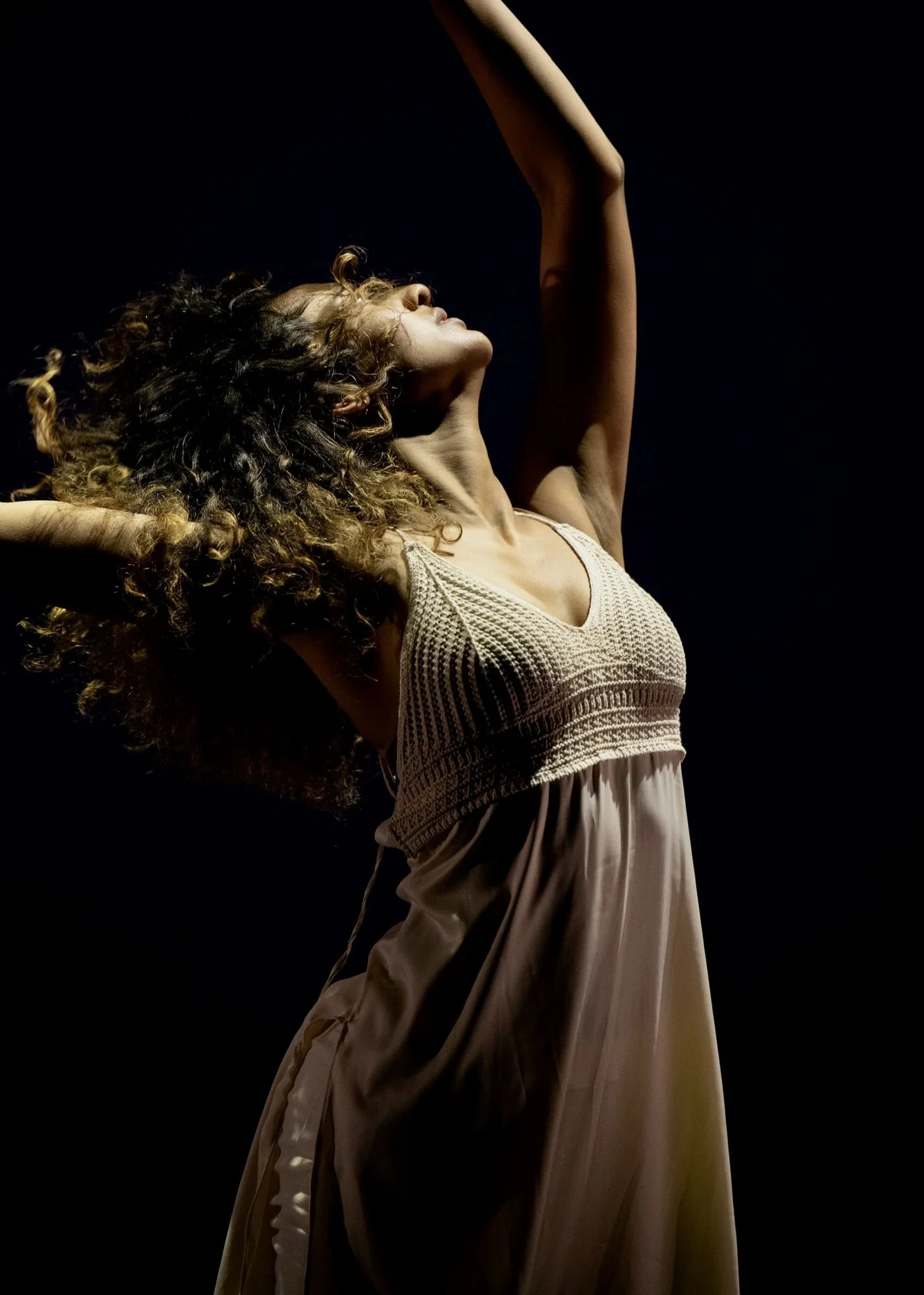
Photography by Camilla Greenwell.
Kathak in a Global Context
Observing Kathak’s evolution from her position in the UK, Tulani is acutely aware of the challenges and adaptations required for the form to thrive globally. As a teacher with Sujata Banerjee Dance Company for over eight years, she has seen how pedagogy must shift to meet dancers where they are.
Language barriers, particularly in abhinaya texts written in Sanskrit, Hindi, or Urdu, can impede connection for dancers who did not grow up with these languages or cultural references. Tulani herself has begun learning Hindi to deepen her understanding, while also encouraging students to relate traditional narratives to contemporary experiences they recognise.
“Unless you spend real time on it, your abhinaya won’t communicate effectively,” she notes.
Tulani also observes that modern lifestyles often leave little space for riyaaz — the sustained daily practice essential to depth in Kathak. At the same time, she acknowledges a growing emphasis on technical virtuosity, which can travel more easily across audiences due to rhythm’s universality.
While large-scale group choreographies and bigger stages have expanded Kathak’s reach, she expresses concern that some of the form’s improvisational essence risks being lost. In response, she finds herself returning to the roots of the practice, seeking to understand its nuances so that evolution does not come at the expense of Kathak’s core.
Maintaining Excellence and Pathways Forward
“The importance that gurus place on riyaaz is what has sustained high standards over generations.”
When reflecting on how Kathak has maintained such high standards despite existing largely outside formal institutions, Tulani points to discipline, devotion, and the guru–shishya tradition.
“The importance that gurus place on riyaaz is what has sustained high standards over generations,” she explains. Training, for many, is not merely professional but spiritual — a way of life shaped by daily practice and care for the lineage.
She also acknowledges the role of popular culture, including Bollywood, in increasing visibility and respect for the form. Looking ahead, Tulani sees institutions as having the potential to provide structure and resources, provided they honour the relational heart of Kathak.
For the next generation of Kathak dancers, Tulani hopes to see full-time training pathways that prepare artists not only technically, but professionally. She also advocates for more opportunities for dancers to train and perform live with musicians — a vital yet often underdeveloped aspect of the form in its modern context.
“Music is such an integral part of Kathak,” she says, “and dancers should feel ready to perform solo with live music.”
Grounded in tradition yet open to exploration, Tulani’s practice reflects a Kathak that is living, responsive, and deeply human — a form that continues to offer both stillness and possibility in a changing world.